
.png)

Standard Plugs vs. Custom Molded Masks: A Cost-per-Part Comparison
Standard masking plugs are inexpensive, versatile, and easy to deploy across a wide range of industrial finishing applications. Custom molded masks require more upfront investment but can simplify repetitive or complex masking. The better choice depends on more than product price—it depends on what each approach costs per acceptable finished part.
For powder coating, e-coating, plating, anodizing, painting, and other surface finishing processes, masking is often treated as a consumable expense.
A plug costs this much. A cap costs that much. A custom molded mask requires tooling. Tape is inexpensive by the roll.
But comparing masking methods by purchase price alone can produce the wrong answer.
The real cost of masking also includes the time operators spend selecting products, installing them, making adjustments, cutting or trimming supplemental masking, removing masks after finishing, cleaning up, and correcting masking-related problems.
That makes cost per finished part a more useful metric.
Sometimes the lowest-cost solution is a standard plug.
Sometimes investing in custom molded masking can reduce the total cost of a repetitive operation.
The important question is not, “Which mask costs less?”
It is, “Which masking process costs less for every acceptable part we produce?”
The lowest-priced mask is not necessarily the lowest-cost masking process.
When Standard Masking Plugs Make Sense
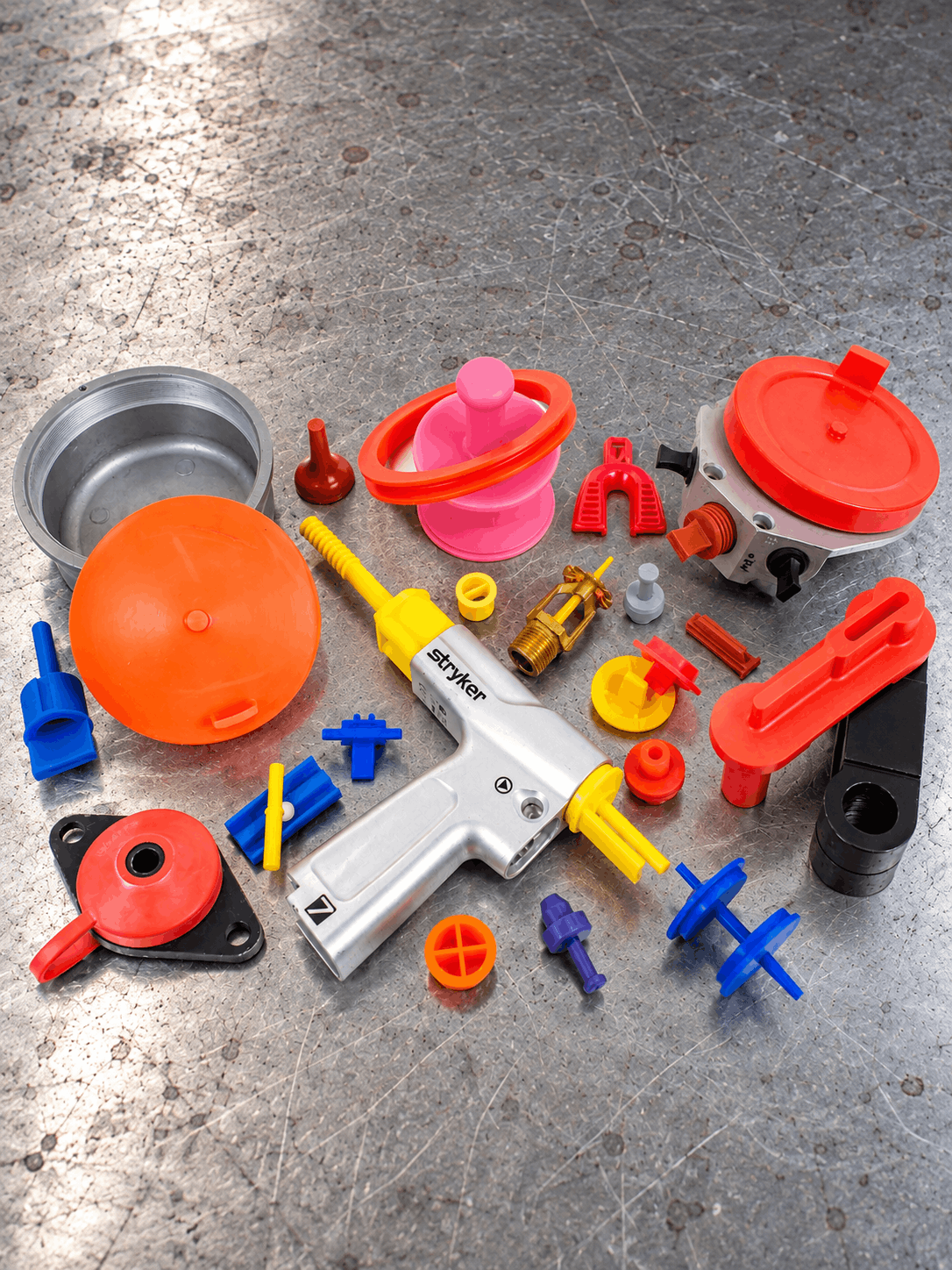
Standard plugs are one of the most practical tools available for industrial masking.
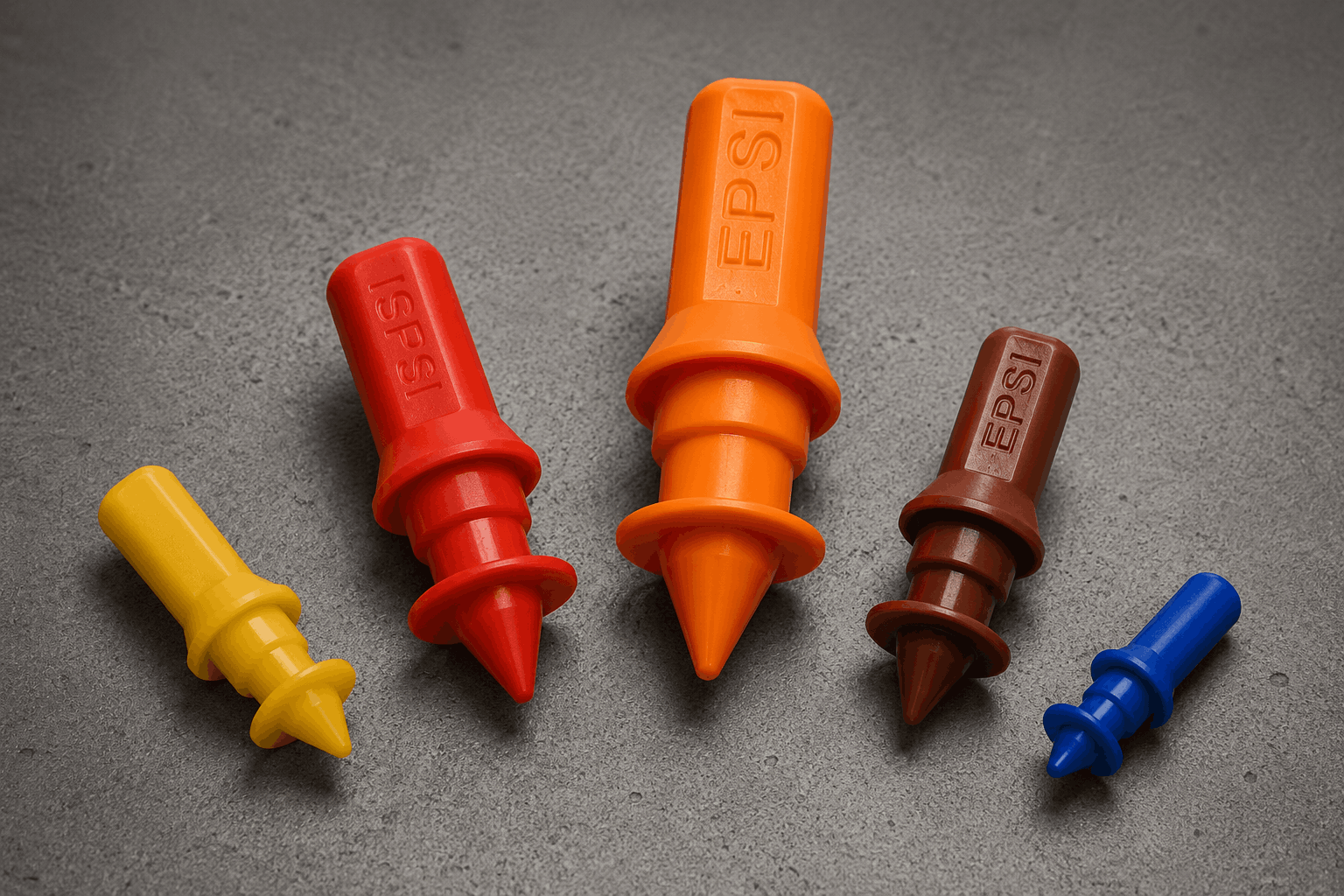
Tapered plugs, pull plugs, threaded plugs, washer plugs, and other standard geometries can protect holes, threads, bores, ports, and related features during finishing. Choosing the right masking product depends on factors such as the process, temperature, opening dimensions, required coverage, installation and removal method, and expected reuse.
When the feature geometry matches an existing product well, a standard plug can provide an efficient solution with little or no development cost.
Standard plugs are particularly attractive when:
- Hole or port geometry is relatively simple
- Existing plug sizes provide the required fit
- Each part requires relatively few masks
- Operators can install and remove the plugs quickly
- The same plug size works across multiple part numbers
- Production volumes do not justify custom tooling
- Part designs or masking requirements change frequently
- A facility processes a high mix of different components
Standard products can also simplify procurement. Instead of developing a new masking solution for every part number, manufacturers can establish a library of common plugs that covers recurring feature sizes across multiple products.
That flexibility is especially useful in job shops and high-mix manufacturing environments.
Where Standard Plugs Can Become Expensive
The economics begin to change when an inexpensive standard product creates an expensive manual process.
Imagine a component requiring 12 individual plugs.
The plugs themselves may cost very little. But the time spent masking still includes identifying the correct size, retrieving the plugs, installing all 12, verifying their placement, and removing all 12 after finishing.
Now imagine that the component also needs tape around a flange and two additional masks around irregular features.
The material cost may still look attractive.
The labor may not.
As production volume increases, repeated operator motions become part of the cost calculation.
A standard plug also becomes less economical if operators frequently need to adjust it, combine several products to protect one feature, supplement it with tape, or struggle to remove it after processing.
None of this means standard plugs are the wrong solution. It means their true cost cannot be determined from the purchase price alone.
When Custom Molded Masking Becomes Worth Evaluating
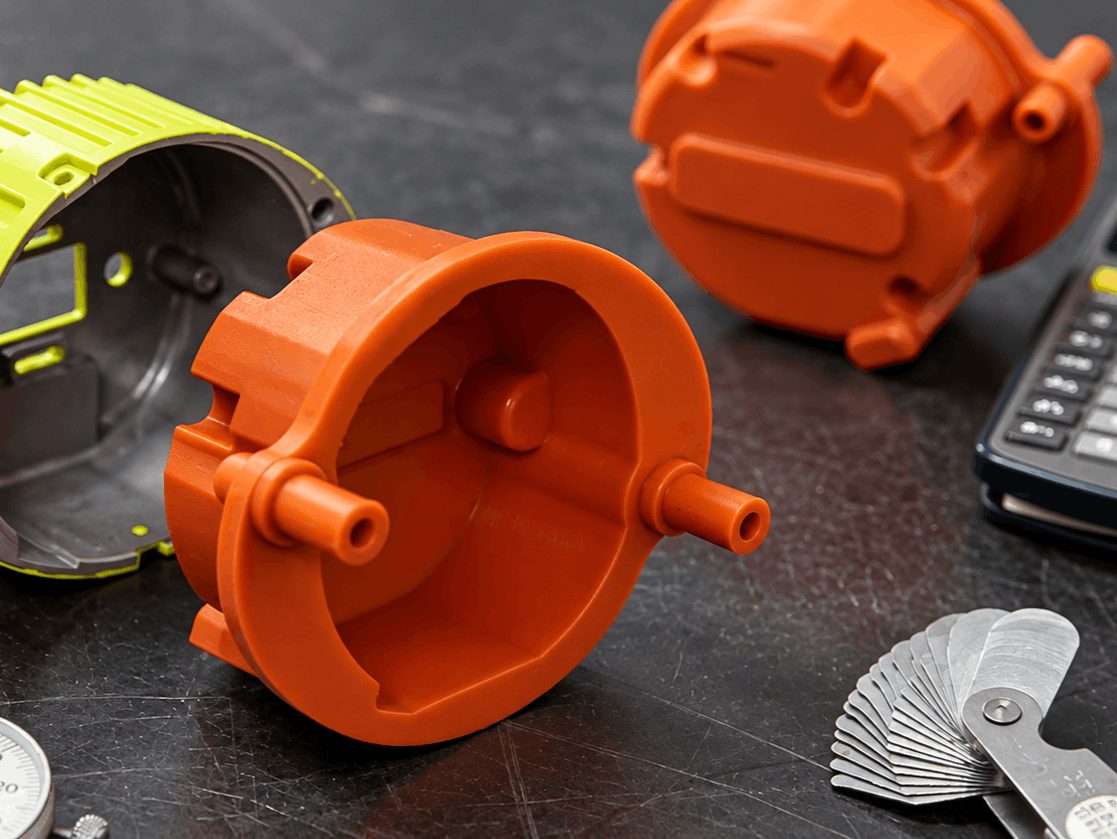
Custom molded masks are designed around a specific component, feature, or group of features.
That specificity creates an upfront investment that standard products generally do not require. Engineering, tooling, sampling, testing, and qualification all need to be considered.
For an occasional job or frequently changing component, that investment may make little sense.
For a stable, repetitive application, the economics can look very different.
Custom masking is worth evaluating when:
- Several individual plugs or caps are installed on every part
- Operators repeatedly cut or trim tape
- Multiple masks could potentially be combined
- Standard products do not match the geometry well
- Mask placement varies between operators
- Installation requires excessive handling
- Demasking is slow
- The same component runs at significant volume
- Rework is associated with inconsistent masking
- A repeatable masking boundary is difficult to achieve manually
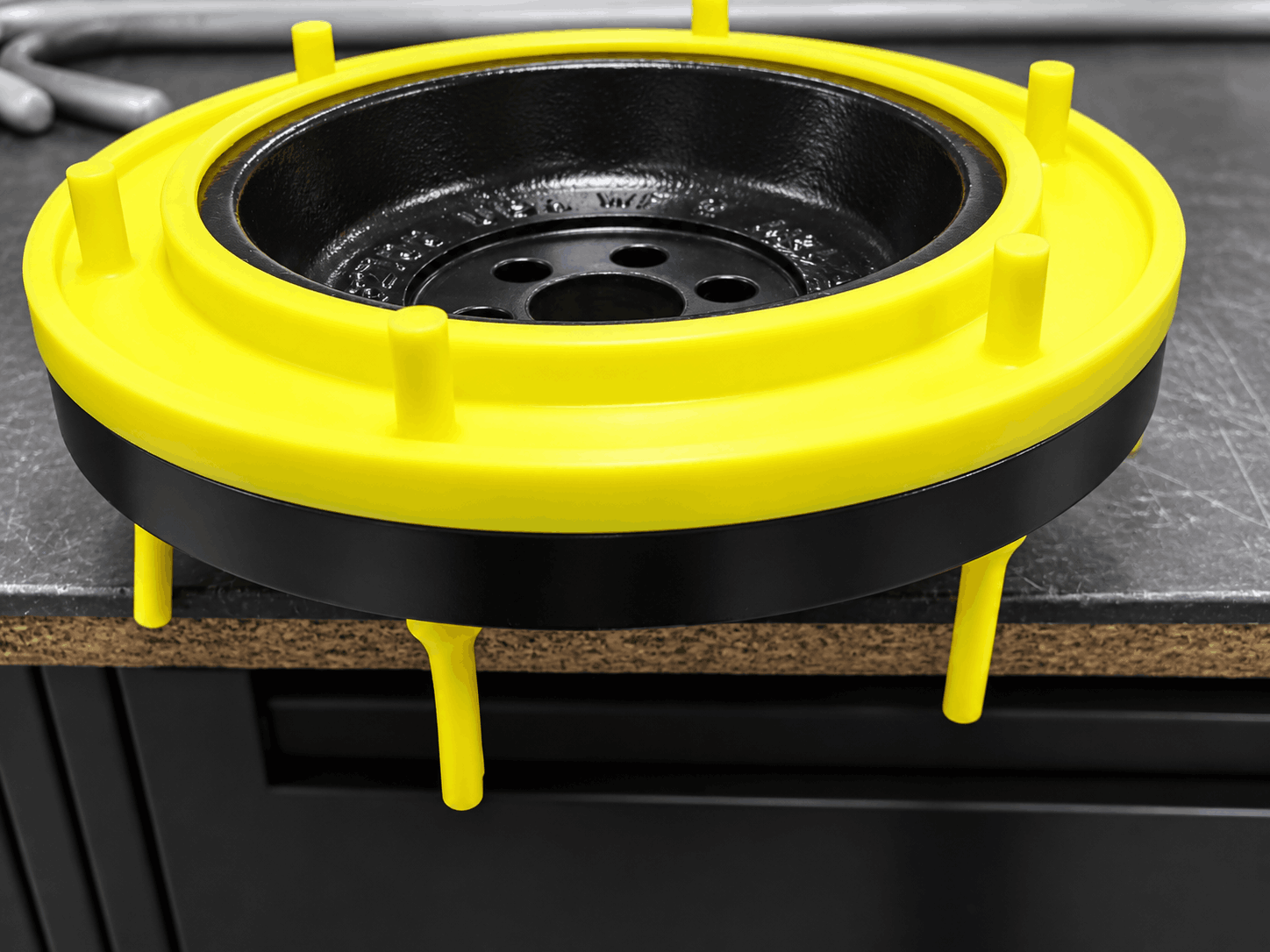
A custom mask may incorporate several protected features into one product or use the component geometry to help locate the mask consistently, potentially reducing manual masking time by eliminating separate installation and positioning steps.
The value is not simply that the mask is custom.
The value comes from the production steps it may eliminate or simplify.
Custom masking earns its value when the labor and process savings outweigh the cost of developing and using it.
Build a Cost-per-Part Comparison
A useful comparison starts with the complete masking cycle.
For each option, calculate:
Material cost per part
Include plugs, caps, tape, discs, custom masks, and other masking consumed or allocated to each component.
Installation labor
Measure how long operators actually spend applying the masking.
Preparation labor
Include measuring, cutting, trimming, selecting sizes, gathering materials, or assembling multiple masking components.
Demasking labor
Time how long it takes to remove all temporary masking after finishing.
Reuse
For reusable masking, estimate realistic service life under the actual process—not an idealized maximum.
Rework and cleanup
Account for recurring coating leakage, residue, damaged masks, difficult removal, cleanup, and other sources of powder coating rework associated with the masking method.
Tooling or development cost
For custom masking, spread applicable upfront costs across a realistic production quantity.
The basic comparison can be expressed as:
Cost per part = masking material + labor + allocated tooling + recurring rework/cleanup costs
That does not capture every manufacturing variable, but it creates a much more useful starting point than comparing unit prices.
A Simple Hypothetical Example
Consider a manufacturer producing 20,000 identical components annually.
The existing process uses six standard plugs and two manually cut pieces of tape.
Assume the total masking material costs $0.35 per part and operators spend 75 seconds installing and removing the masking.
At a hypothetical loaded labor rate of $30 per hour, 75 seconds represents approximately $0.63 in direct labor per part.
That brings the simplified masking cost to approximately:
Standard masking: $0.98 per part
Now consider a hypothetical custom molded solution that protects several of those features in fewer steps.
Suppose its allocated product/tooling cost works out to $0.60 per part, but total masking and demasking time falls to 30 seconds.
At the same hypothetical labor rate, that is approximately $0.25 in labor.
Custom masking: $0.85 per part
In this simplified scenario, the custom product costs substantially more than the standard masking materials—but the process costs less per part.
Across 20,000 parts, a $0.13 difference represents $2,600.
Those numbers are illustrative, not a benchmark. Real results depend on actual labor rates, tooling, mask life, production volumes, process conditions, and operator performance.
The point is the method of comparison.
Production Volume Changes the Equation
Custom tooling creates a fixed cost.
Volume determines how widely that cost can be distributed.
If developing a custom mask costs $5,000 and the program produces only 500 parts, the tooling alone represents $10 per part before considering the mask itself.
At 50,000 parts, that same $5,000 represents $0.10 per part.
This is why there is no universal production quantity at which custom masking suddenly becomes economical.
The break-even point depends on the difference between the two processes.
A custom solution that saves five seconds per part may require substantial volume to justify itself.
One that eliminates several minutes of cutting, positioning, plugging, and removal can potentially reach break-even much sooner.
Don't Ignore Mask Life
Reusable masking adds another variable.
A custom molded silicone mask that survives repeated processing cycles distributes its purchase cost across those uses. Standard silicone plugs may also be reusable depending on their condition and application.
But reuse assumptions should be realistic.
Process temperature, coating buildup, chemical exposure, handling, stretching, tearing, geometry, and operator practices can all affect service life.
Instead of assuming a mask will survive a certain number of cycles because it theoretically can, track actual reuse in production.
A simple identification or rotation system can help manufacturers understand real mask life and build better cost estimates.
RELATED ARTICLE: Silicone vs. EPDM: Which Powder Coating Masking Products Do You Need?

Consistency Has an Economic Value, Too
Labor is not the only potential advantage of an application-specific mask.
Repeatability can have value.
If operators manually position several separate masks, there are multiple opportunities for variation. Standardizing the masking process with a custom molded mask designed to locate against a repeatable part feature may reduce some of those individual placement decisions.
That can simplify training and make the masking method easier to document.
However, custom does not automatically mean more accurate.
The mask still needs to be designed, manufactured, installed, maintained, and validated appropriately for the application. Part tolerances, mask tolerances, material behavior, finishing conditions, and operator technique can all affect the result.
The correct comparison is between validated processes, not simply standard versus custom products.
Consider the Cost of Change
Custom masking has a disadvantage that can easily be overlooked: it is built around a particular application.
If the component design changes, the custom mask may also need to change.
Standard plugs are inherently more adaptable.
A manufacturer expecting frequent engineering revisions, short product life cycles, or highly variable production may place greater value on that flexibility even when a custom solution appears slightly less expensive on paper.
This is another reason the decision should not be reduced to a simple volume threshold.
Ask how stable the component and masking requirements are likely to remain over the expected program life.

Run a Time Study Before Making the Decision
You do not need a complicated manufacturing study to begin.
Choose a representative production run and measure:
- Time spent preparing masking
- Installation time
- Number of separate masks installed
- Adjustment or trimming time
- Demasking time
- Cleanup
- Masking-related rework
- Actual reuse, where applicable
Then calculate the annual cost of the current process.
This creates a baseline against which an alternative can be evaluated.
Without that baseline, it is easy to spend engineering effort trying to reduce a visible material expense while overlooking a much larger labor expense.
How EPSI Can Help
Choosing between standard plugs and custom molded masking is not an either-or decision across an entire finishing operation. The most efficient process may use standard products on simple recurring features, custom masking on labor-intensive geometries, and a combination of both on more complex components.
EPSI works with manufacturers and finishers to evaluate part geometry, no-coat requirements, finishing conditions, production volume, operator touch time, removal, reuse, and process repeatability to identify a masking approach that fits both the component and the economics of production.
Caps, Plugs, Tapes & Discs
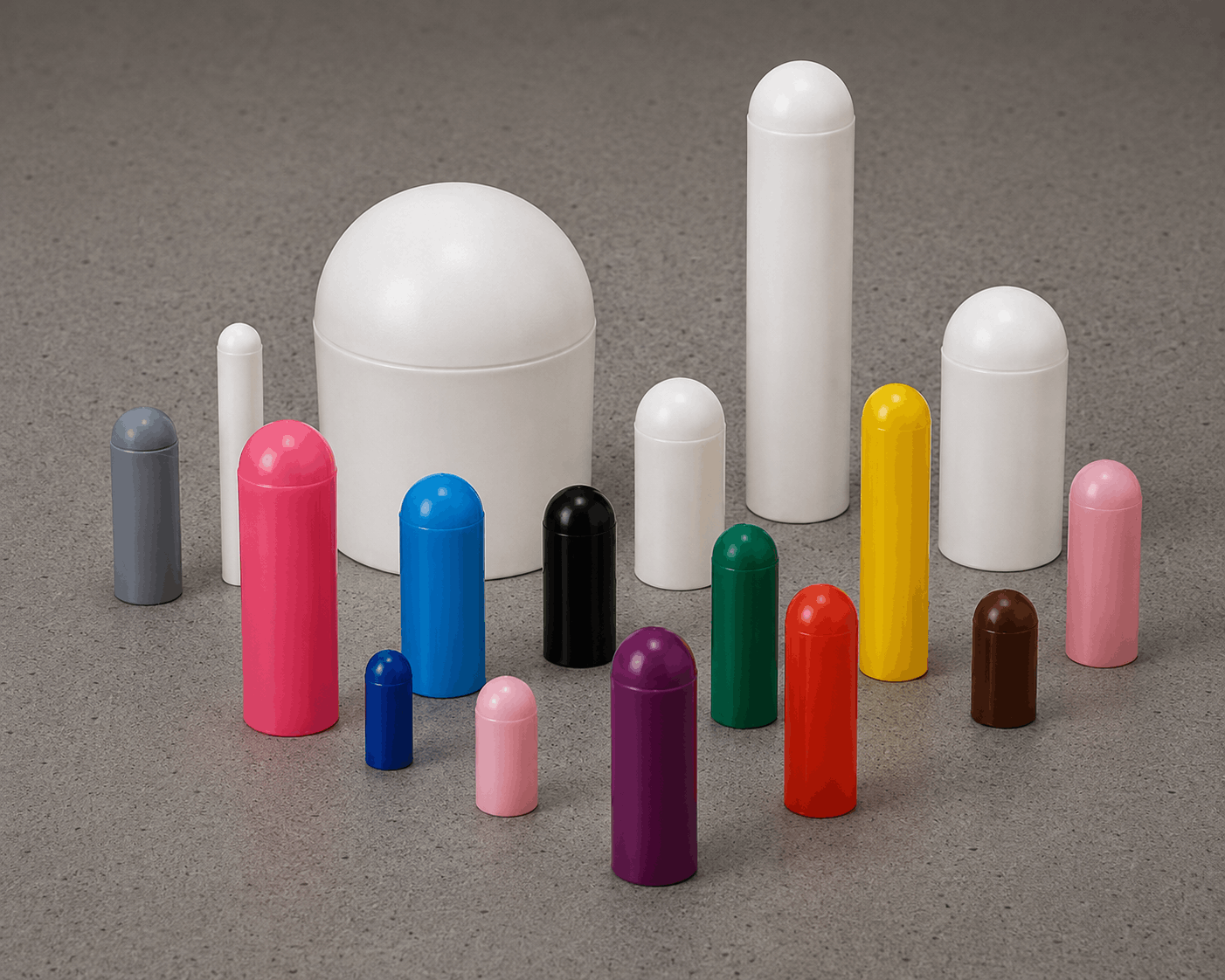
Use standard masking products for recurring holes, threads, studs, surfaces, and other features where established sizes provide efficient installation, removal, and protection.
Explore Masking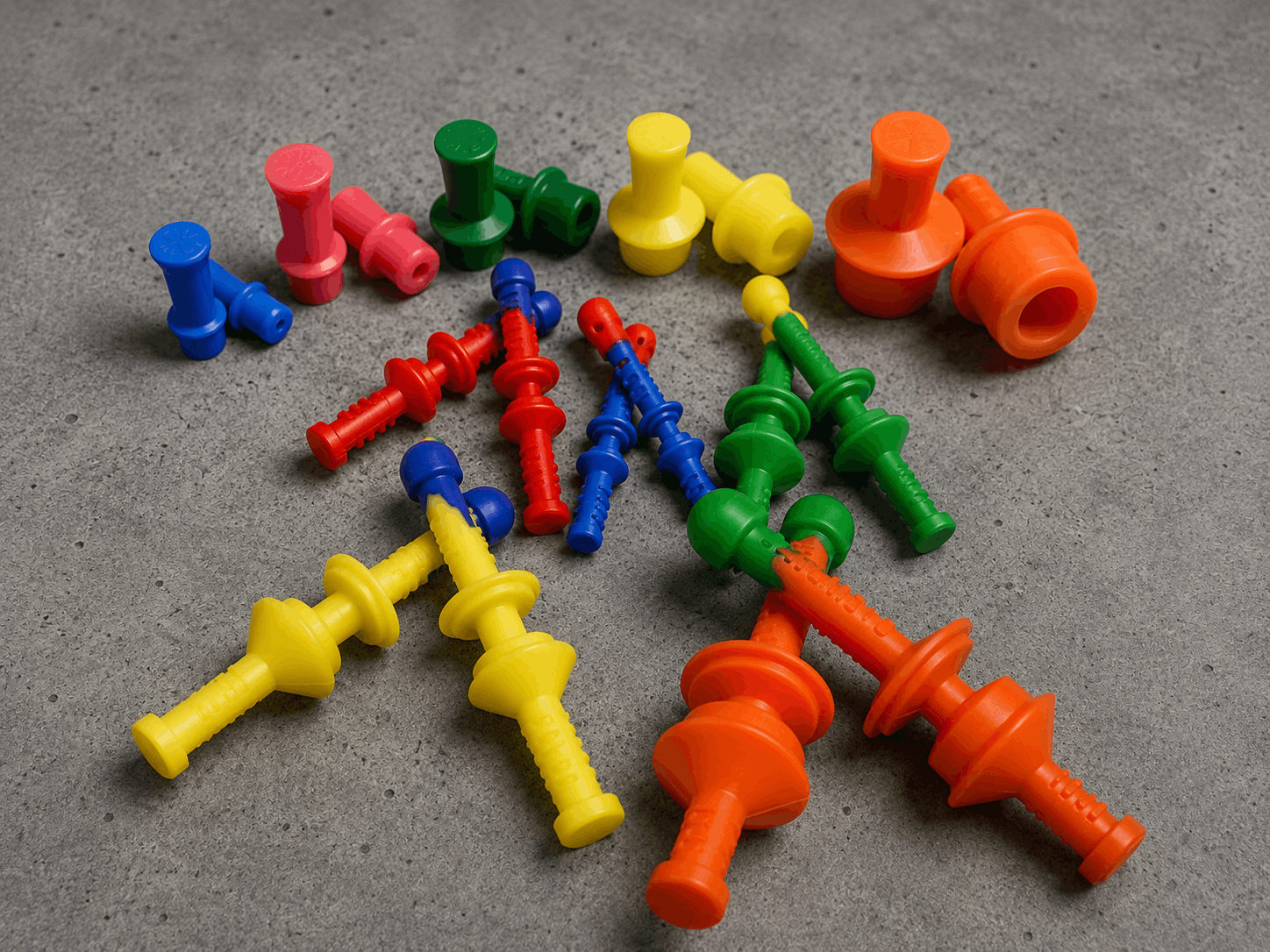
Custom Masking
Combine difficult or repetitive masking steps into application-specific solutions engineered around part geometry, finishing requirements, production volume, and operator handling.
Explore Custom.png)
Custom Racking
Develop application-specific racking around part orientation, stability, conductive contact, coating access, loading efficiency, and the requirements of the finishing process.
Explore Racking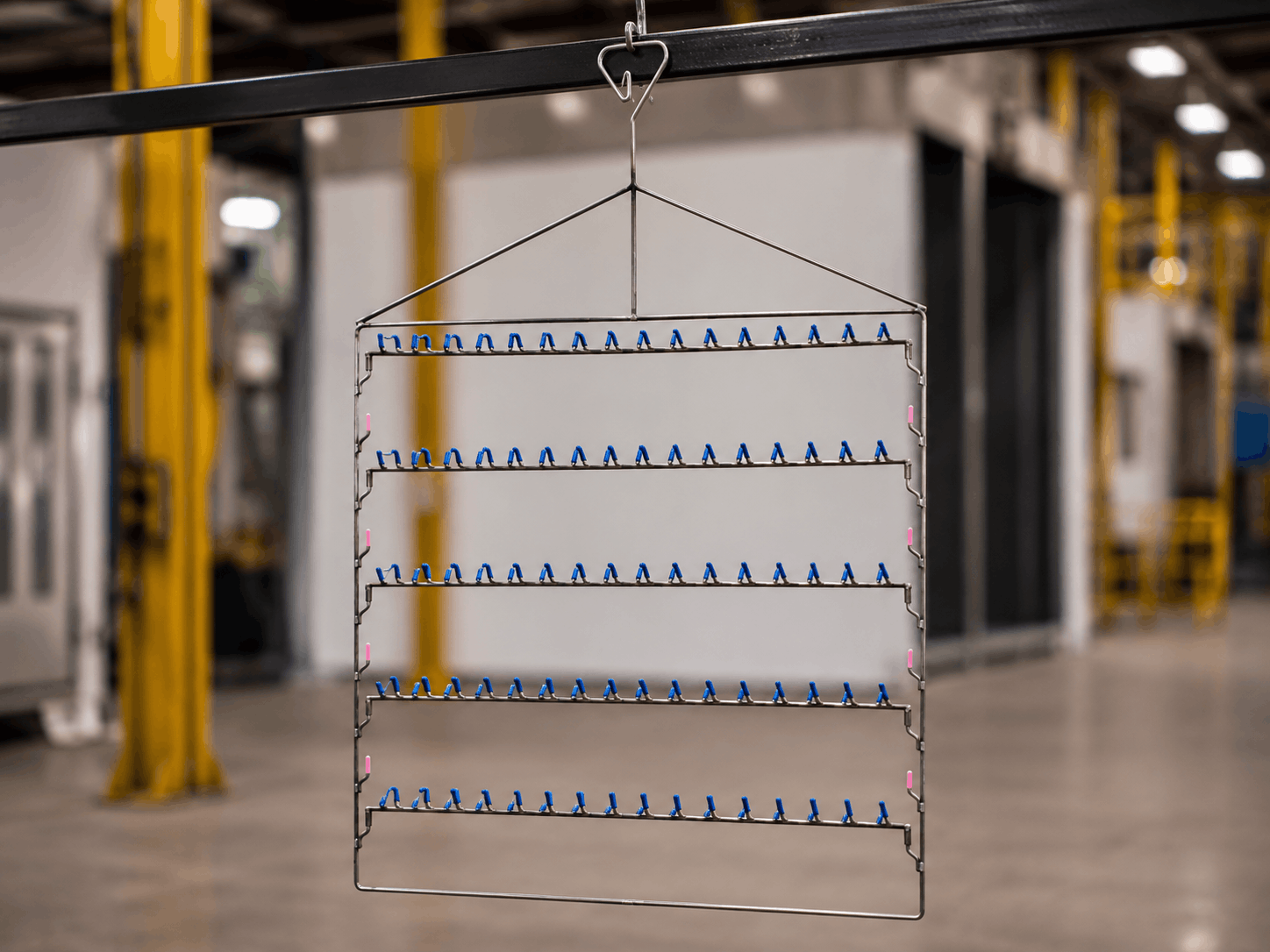
Modular Racking
Create flexible hanging configurations for changing parts and production mixes using adaptable frames, crossbars, hooks, and other modular components.
Explore Modular RackingStandard or Custom? Start With the Process
There is no universal winner between standard plugs and custom molded masks.
For a simple hole, a correctly selected standard plug may be difficult to improve upon.
For a complex, high-volume component requiring many plugs, pieces of tape, trimming steps, and repeated operator decisions, a custom mask may change the economics considerably.
Measure the current process.
Calculate total cost per finished part.
Estimate realistic production volume and program life.
Then compare alternatives under actual finishing conditions.
The best masking solution is not necessarily the cheapest item in the purchasing system.
It is the one that produces the required finished part reliably at an acceptable total cost.
Frequently Asked Questions
Are standard masking plugs cheaper than custom molded masks?
Standard plugs generally require little or no application-specific tooling, making them an economical starting point for many applications. Custom molded masks involve additional development and potentially tooling costs. However, purchase price alone does not determine total cost. A custom solution may cost less per finished part if it substantially reduces installation, removal, preparation, or rework.
When should I use standard masking plugs?
Standard plugs are strong candidates when an existing size and geometry fits the feature well, the required masking boundary is straightforward, installation and removal are efficient, and the application does not require numerous individual masking steps.
When should I consider custom molded masking?
Consider evaluating custom masking when a repetitive application requires multiple standard masks, significant tape cutting or trimming, difficult placement, excessive touch time, or complex geometry. Higher production volumes and stable part designs can make the upfront investment easier to justify.
How do I calculate masking cost per part?
Include masking materials, installation and removal labor, preparation, realistic reuse, allocated tooling or development costs, cleanup, and recurring masking-related rework. Divide shared or upfront costs across a realistic production quantity rather than looking only at the unit price of the mask.
How do I calculate the break-even point for custom masking?
Estimate the total cost per part of the current process and the proposed custom process. The difference represents the potential savings per part. Compare those savings with the upfront tooling and development investment to determine approximately how many parts are required to recover the investment.
Does custom masking always reduce labor?
No. Custom masking should be evaluated against the actual application. A poorly designed custom mask may be difficult to install, remove, or maintain. Prototype and production testing are important before assuming labor savings.
Can standard plugs be reused?
Many masking plugs are designed for reuse, but actual service life depends on material, temperature, chemical exposure, coating buildup, geometry, handling, and the finishing process. Inspect reusable masking and base cost calculations on observed production life.
What types of standard plugs are available for powder coating?
Industrial masking plugs include tapered, pull-style, straight, threaded, washer, and other specialty geometries. Selection should account for the opening, required masking boundary, process conditions, temperature, installation method, removal, and expected reuse.
Is custom masking only economical for very high-volume production?
Not necessarily. Volume is important because tooling costs can be spread across more parts, but labor savings per part also matter. A particularly time-consuming masking operation may justify custom development at a lower volume than a simple application that saves only a few seconds.
Should labor be included when comparing masking products?
Yes. Total masking touch time can include material preparation, product selection, installation, adjustment, inspection, demasking, sorting reusable products, and cleanup. Ignoring these activities can make an inexpensive masking product appear cheaper than the overall process actually is.
Can custom masks protect multiple features at once?
Depending on component geometry and process requirements, an application-specific mask may be designed to protect multiple related features or replace several separate masking operations. Feasibility should be evaluated against the actual part, tolerances, finishing process, and required boundaries.
How does part design stability affect the standard-versus-custom decision?
Custom masks are application-specific, so engineering changes can potentially require mask modifications or replacement tooling. Standard plugs offer greater flexibility when components change frequently. Expected program life and design stability should therefore be included in the economic comparison.
What information should I provide when requesting a custom masking solution?
Useful information includes part drawings or models, dimensions and tolerances, surfaces that must be protected, finishing process, process temperatures and chemistry, production volume, current masking method, current masking and demasking time, quality requirements, and any recurring problems with the existing process.
How should a new masking method be validated?
Test it under the actual production process. Evaluate fit, retention, masking boundaries, temperature and chemical exposure, coating leakage, installation and removal, reuse where applicable, and the finished component against its drawing and process requirements. A cost improvement only matters if the alternative continues to produce an acceptable finished part.
Find the Right Masking Approach for Your Process
The best masking solution depends on more than the price of the product. Part geometry, production volume, operator touch time, reuse, finishing conditions, and quality requirements all affect the true cost per finished part.
EPSI can help evaluate your current masking process and identify opportunities to simplify application, reduce labor, improve repeatability, or determine when a custom solution may make sense.