

.png)
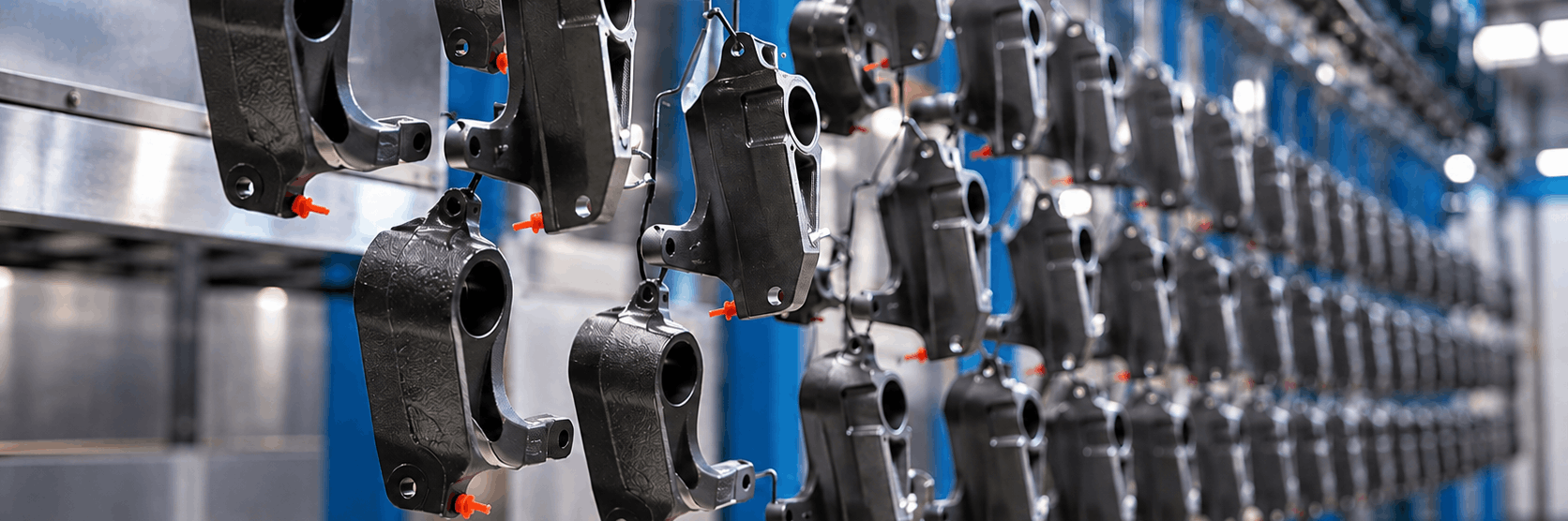
Masking and Racking Brake Components for Repeatable Automotive Finishing
Brake components bring together many of the challenges that make automotive finishing demanding: complex geometry, critical interfaces, high production volumes, and surfaces that may need very different coating outcomes on the same part. For manufacturers and finishers working with calipers, brackets, housings, and related brake hardware, a repeatable masking and racking strategy can help protect functional features while supporting consistent part presentation, grounding, handling, and throughput. These same considerations are central to effective automotive surface finishing across a broader range of vehicle components.
A brake component may look straightforward when it reaches the coating line. In practice, it can contain threaded holes, bores, machined surfaces, mounting interfaces, sealing areas, hardware locations, and other features that have different finishing requirements.
The challenge is not simply keeping coating off certain areas.
It's creating a masking and racking method that operators can repeat reliably across hundreds or thousands of parts.
Repeatable brake-component finishing starts with consistent masking, racking, contact, and part orientation.

Start With the Finished-Part Requirements
Before selecting a plug, tape, hook, or rack, define what the finished brake component actually requires.
The engineering drawing, coating specification, customer requirements, and qualified finishing process should determine which areas receive coating and which do not.
Depending on the component and specification, controlled areas may include:
- Threaded holes and studs
- Machined bores
- Mounting or mating surfaces
- Seal-related interfaces
- Hardware attachment points
- Fluid ports and openings
- Defined electrical or grounding contact points
- Areas used for hanging or fixturing
Do not assume that every machined surface should automatically remain uncoated. The required boundary should come from the applicable design and process requirements.
Once those boundaries are defined, the masking method can be built around them.
Match the Mask to the Feature
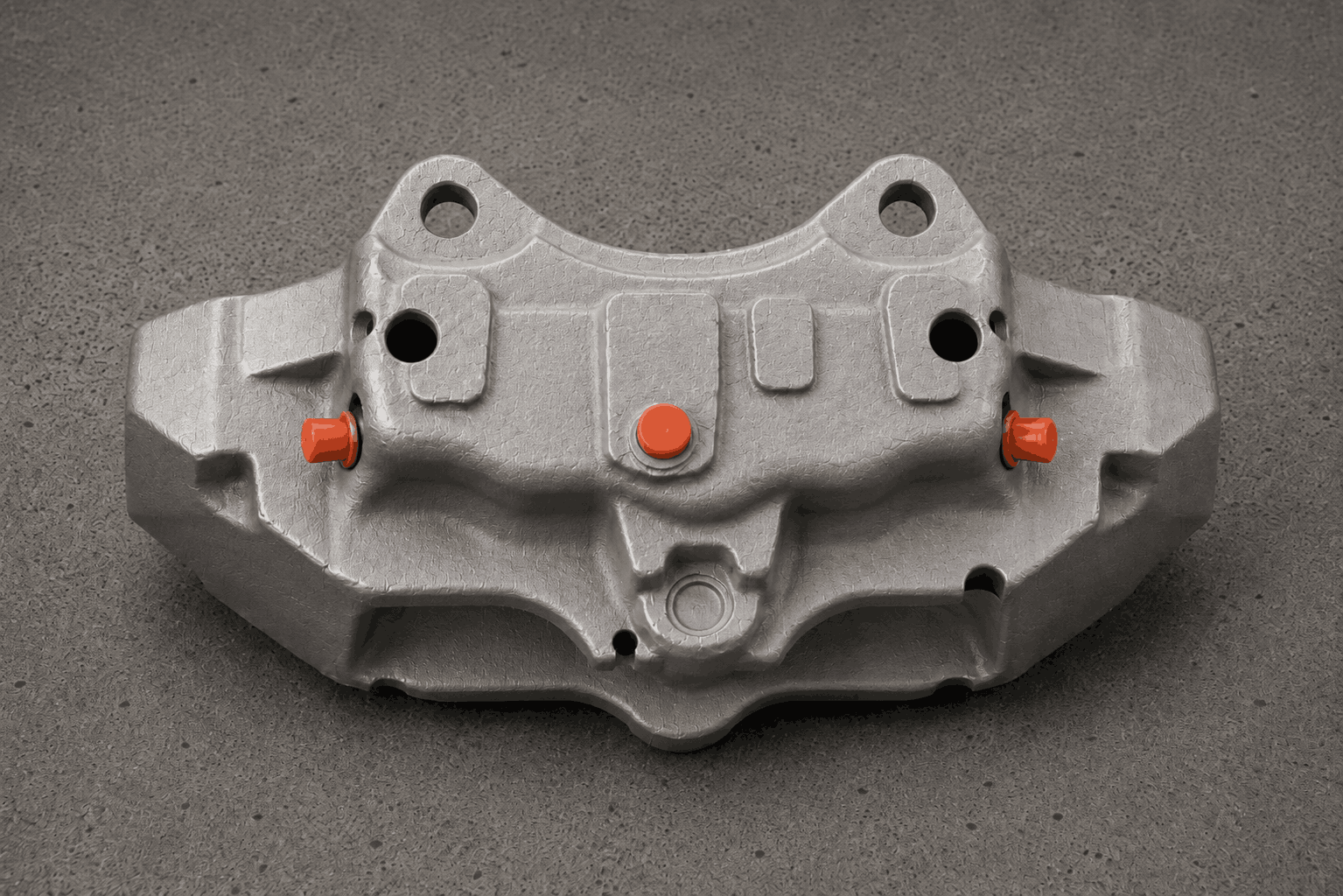
Automotive brake components can require several masking methods on a single part.
Standard plugs may work well for recurring holes, bores, and threaded openings. Caps can protect studs and projecting features. Tapes and discs can cover defined flat areas. More complex or repetitive geometries may justify pre-cut or custom masking.
The objective is not to use the fewest masking products possible. It is to develop a method that achieves the required protection without introducing unnecessary operator work or variation.
Fit matters, too.
A plug that is difficult to install may slow production. One that fits too loosely may not remain where intended throughout processing. A mask that extends beyond the required boundary may interfere with the finished coating area.
For high-volume automotive finishing, small differences in application time can become significant when multiplied across an entire production run.
Think Beyond Mask Price
A low-cost masking product does not necessarily create a low-cost process.
Consider a caliper requiring multiple plugs, pieces of tape, and individually positioned masks. Each item may be inexpensive, but operators must retrieve, install, verify, remove, and potentially sort or clean those products.
That labor becomes part of the cost per finished component.
Measure the complete masking cycle, including preparation, application, adjustments, inspection, demasking, cleanup, and recurring rework.
If operators repeatedly cut the same tape profile or combine several products around the same feature, an application-specific solution may be worth evaluating. EPSI has documented an automotive brake-caliper application in which manual tape application and trimming had become a production bottleneck; moving to custom die-cut masking substantially reduced application time.
At automotive volumes, small masking-time savings can significantly reduce labor per finished component.
.png)
Racking Is Part of the Finishing Process
Masking protects defined surfaces. Racking determines how the component moves through the process.
For brake calipers and other components, rack design can influence part orientation, spacing, coating access, loading density, contact location, grounding, stability, and operator handling.
That makes the rack more than a material-handling fixture.
In electrostatic powder coating, the rack and hook arrangement also participate in the conductive path to ground. Contact surfaces therefore need to be considered when determining how the component will hang and where masking can be placed.
EPSI's automotive guidance recommends evaluating hanging and grounding together, selecting contact points and rack geometry that support electrical continuity while preserving finish-critical areas and fitting the available conveyor spacing.
RELATED ARTICLE: What Causes Poor Grounding in Powder Coating?
Choose Contact Points Intentionally
An effective hanging point needs to satisfy several requirements at once.
It must support the component securely. It should provide the required contact for the finishing process. It should avoid unacceptable marks on appearance-critical or functional surfaces. And it needs to remain practical for operators to load and unload repeatedly.
The best location depends on the specific component and finish requirements.
Once an acceptable contact point has been identified, maintaining it becomes important. Coating buildup on hooks and racks can change contact conditions over time, so rack maintenance should be treated as part of process control rather than an unrelated maintenance task.

Control Part Movement and Orientation
A component that shifts on the rack can change how it is presented to the coating process.
For brake hardware with complex recesses, edges, bores, and projecting features, consistent orientation helps keep the production setup repeatable from part to part.
Rack geometry should hold the component securely through the conditions it will encounter on the line while preserving appropriate coating access.
Spacing matters as well. Increasing parts per rack can improve line density, but only when adequate coating access and process performance can still be maintained. EPSI describes rack design as a balance among density, contact points, presentation, loading efficiency, and finish risk rather than simply fitting the maximum number of parts onto a fixture.
Standardize Across Repeating Part Families
Automotive production often creates an opportunity to standardize.
Different brake-component variants may share common hole sizes, threads, mounting locations, or general hanging requirements. Identifying those recurring features can make masking and racking easier to control.
A standardized masking and racking process might define:
Masking product: Which plug, cap, disc, tape shape, or custom mask protects each feature.
Placement: Exactly where the coating boundary should be located.
Rack configuration: Which fixture, hook, crossbar, or hanging point is used.
Part orientation: How the component is presented on the rack.
Inspection: What operators verify before the component enters the finishing process.
Visual work instructions can be particularly useful when similar-looking features have different requirements.
The goal is to reduce reliance on operator interpretation.
Consider Custom Masking for Repetitive Complexity
Standard products should not be abandoned simply because a component is produced at high volume. If a standard plug works efficiently and reliably, it may remain the best option.
Custom masking becomes worth evaluating when complexity creates repeated labor.
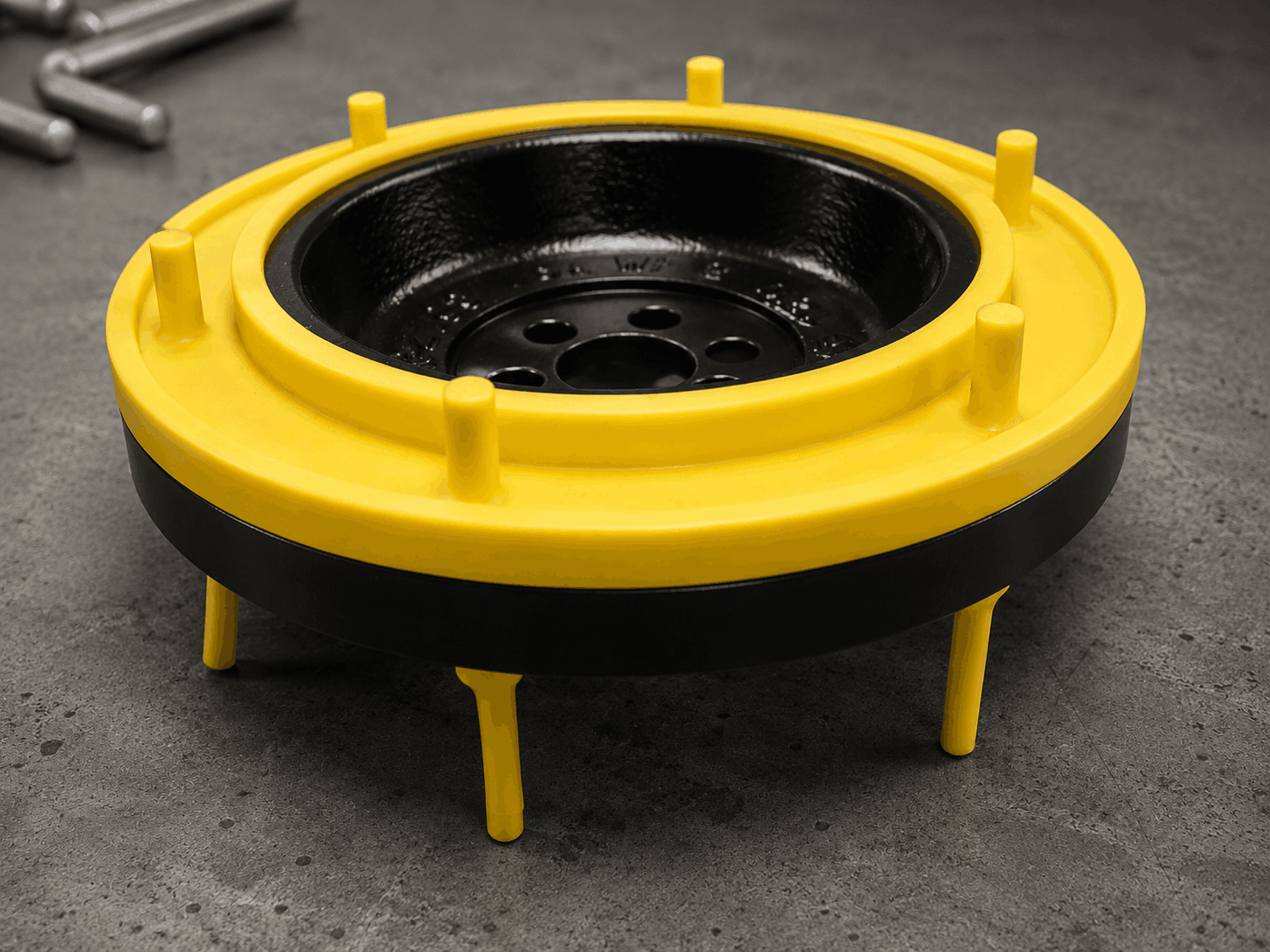
A custom solution may be able to locate against part geometry, protect several related features, replace manually cut tape, or reduce the number of separate masks installed on every component.
The business case should include tooling and development costs, expected mask life, production volume, installation and removal time, and any effect on rework.
Custom should solve a measurable production problem—not merely make the masking product more specialized.
Treat Masking and Racking as One System
It is easy to optimize masking and racking separately.
That can create conflicts.
A well-positioned mask may obstruct the preferred hanging point. A rack contact location may fall inside a critical no-coat boundary. A fixture may hold the component securely but make certain features difficult for operators to mask or demask.
Evaluate the complete sequence instead:
Mask → load → hang → finish → cure/process → unload → demask → inspect.
This can reveal unnecessary handling that is difficult to see when each operation is evaluated independently.
RELATED ARTICLE: You’re Spending More Time Masking Than You Think
How EPSI Can Help
Brake-component finishing often requires masking, hanging, grounding, and part presentation to work together. EPSI can help evaluate the complete application—including part geometry, protected features, process conditions, production volume, operator handling, and rack requirements—to identify a practical combination of standard and engineered solutions. EPSI supports automotive finishing with masking, custom solutions, and racking designed around repeatable production conditions.

Caps, Plugs, Tapes & Discs
Protect recurring threads, bores, studs, openings, and defined surfaces with standard masking products selected around the component and finishing conditions.
Explore Masking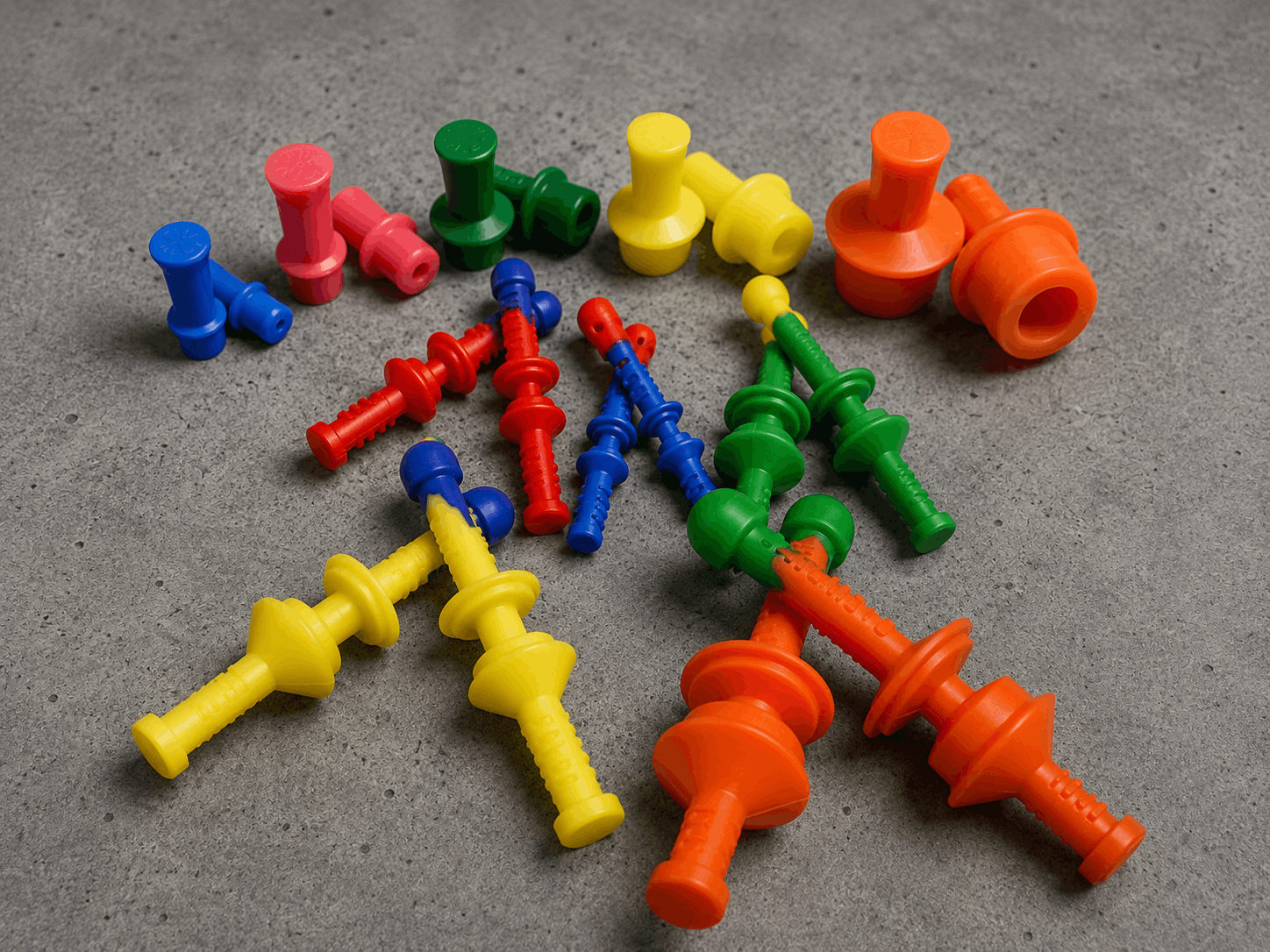
Custom Masking
Simplify repetitive brake-component masking with application-specific solutions designed around difficult geometries, defined coating boundaries, operator handling, and production requirements.
Explore Custom.png)
Custom Racking
Engineer dedicated fixtures around component geometry, contact locations, orientation, loading density, coating access, and repeatable presentation through the finishing line.
Explore Racking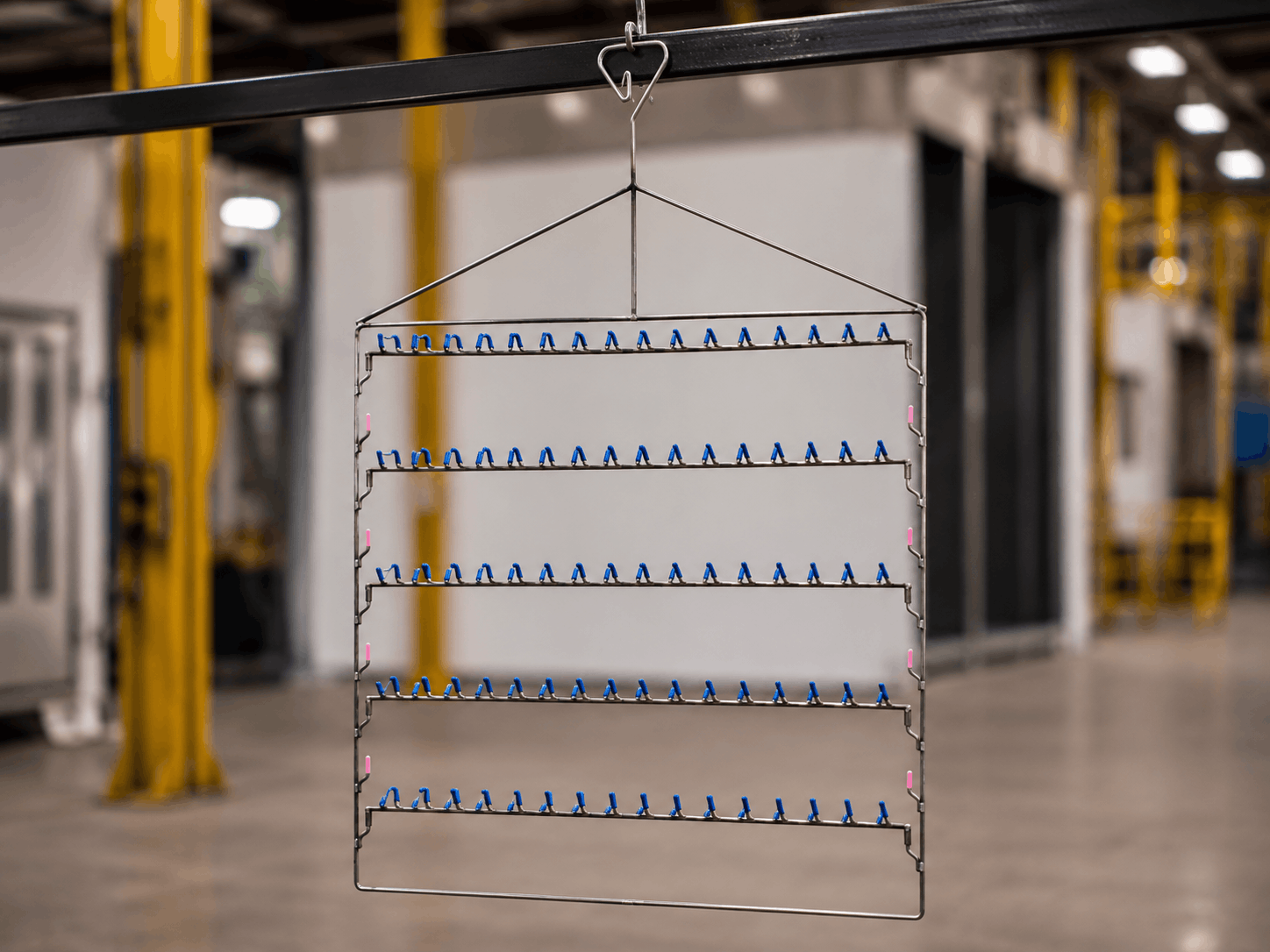
Modular Racking
Adapt hanging layouts for changing brake components and production mixes using reusable frames, crossbars, hooks, and configurable hanging points.
Explore Modular RackingBuild Repeatability Into the Setup
Consistent automotive finishing is not created by the coating application alone.
The process begins with clearly defined finished-part requirements, masking that protects the correct features, contact points selected intentionally, and racking that presents each component predictably.
For brake components, the most useful improvements are often the ones operators can repeat without additional interpretation.
Measure the current process. Document the masking boundaries. Evaluate touch time. Inspect hooks and contact points. Review part movement and rack density. Then look for opportunities to standardize.
The objective is not simply a well-masked brake component.
It is a finishing process capable of producing the required result repeatedly.
Frequently Asked Questions
What areas of a brake caliper may need masking before powder coating?
Requirements vary by component and specification. Potential areas include threaded holes, bores, fluid ports, mounting interfaces, machined surfaces, seal-related areas, and selected hardware locations. The engineering drawing and qualified coating process should define exactly which surfaces must remain coating-free.
What masking products can be used on automotive brake components?
Depending on geometry and process conditions, options can include high-temperature plugs, caps, tapes, discs, die-cut masking, and custom molded products. Selection should consider dimensions, required coating boundary, process temperature and chemistry, installation, removal, and expected reuse.
Can standard plugs be used for brake caliper masking?
Yes, when an existing plug geometry provides the required fit and protection. Standard products can be especially efficient for recurring holes, ports, and bores. Custom masking becomes worth evaluating when standard products create excessive labor or cannot efficiently protect the required geometry.
When should custom masking be considered for brake components?
Consider custom masking when operators repeatedly cut or trim tape, install numerous individual masks, struggle with consistent placement, or spend excessive time masking the same geometry. Production volume, tooling cost, labor savings, reuse, and quality requirements should all be evaluated.
Why does racking matter when powder coating brake components?
Racking affects how the part is supported and presented during finishing. It can influence orientation, spacing, coating access, conductive contact, loading density, stability, and operator handling. For electrostatic powder coating, the hanging system also participates in the path to ground.
How does grounding affect brake-component powder coating?
Electrostatic powder coating requires an effective conductive path between the component and ground. Contact conditions can be affected by the hanging method and coating buildup on hooks or rack contact points. Grounding and rack maintenance should therefore be incorporated into the production process.
How can manufacturers reduce masking time on brake calipers?
Start by measuring the complete masking and demasking cycle. Look for repeated tape cutting, trimming, product selection, individual plug installation, adjustment, and removal. Standard products, pre-cut masking, or custom solutions may reduce unnecessary manual steps when matched appropriately to the application.
Can masking and racking help reduce automotive finishing rework?
They can help control two important parts of the setup. Repeatable masking can reduce variation at defined coating boundaries, while appropriate racking can support consistent orientation, contact, and handling. However, finishing defects can also originate from pretreatment, coating application, cure, contamination, and other process variables.
How should brake components be spaced on a finishing rack?
There is no universal spacing. It depends on component geometry, rack configuration, coating process, application method, conveyor constraints, and required coating access. Increasing rack density should not compromise the validated finishing result.
How often should powder coating hooks and racks be cleaned?
There is no single interval appropriate for every line. Cleaning or refurbishment should be based on the process, coating accumulation, contact performance, rack condition, production schedule, and established maintenance criteria. The goal is to prevent buildup from compromising the function the rack or hook is expected to provide.
Is custom racking worthwhile for high-volume automotive components?
It can be. A dedicated rack may help standardize orientation, contact points, spacing, loading, and part density when the same component runs repeatedly. The economic comparison should include rack investment, expected life, loading labor, throughput, maintenance, and the cost of the finished process—not rack price alone.
Can one rack be used for several brake-component models?
Potentially. Components with compatible envelopes and hanging requirements may work with a common or modular configuration. Modular racking can be useful when production mixes change because hanging layouts can be adapted without requiring a dedicated welded fixture for every application.
What information is needed to evaluate a brake-component masking or racking application?
Useful information includes part drawings or models, component dimensions and weight, defined no-coat areas, finishing process, temperature and chemistry, production volume, current masking method, current hanging points, conveyor constraints, masking and loading time, and any recurring quality or handling problems.
How should a new masking or racking method be validated?
Evaluate it under the actual production conditions and against the applicable drawing, coating specification, and quality requirements. Confirm mask fit and retention, coating boundaries, part stability, contact performance where relevant, coating access, installation and removal, and the finished component before standardizing the new method.
Bring Us Your Toughest Brake Finishing Challenge
Whether you’re dealing with difficult masking areas, inefficient loading, or a component that doesn’t fit your current setup, EPSI can help develop a solution around the application.