

.png)
What Causes Poor Grounding in Powder Coating?
Powder coating relies on many variables working together to produce a high-quality finish. While operators often focus on pretreatment, powder selection, oven performance, and application settings, one of the most overlooked factors in the entire process is grounding.
Poor grounding can quietly reduce transfer efficiency, increase powder consumption, create coating defects, and negatively impact throughput. In many finishing operations, grounding problems go unnoticed until quality issues become severe enough to impact production schedules, customer satisfaction, or profitability.
Whether you operate a batch powder coating system, an automated finishing line, or a high-volume production environment, understanding grounding is essential to achieving consistent coating performance.
What Is Grounding in Powder Coating?
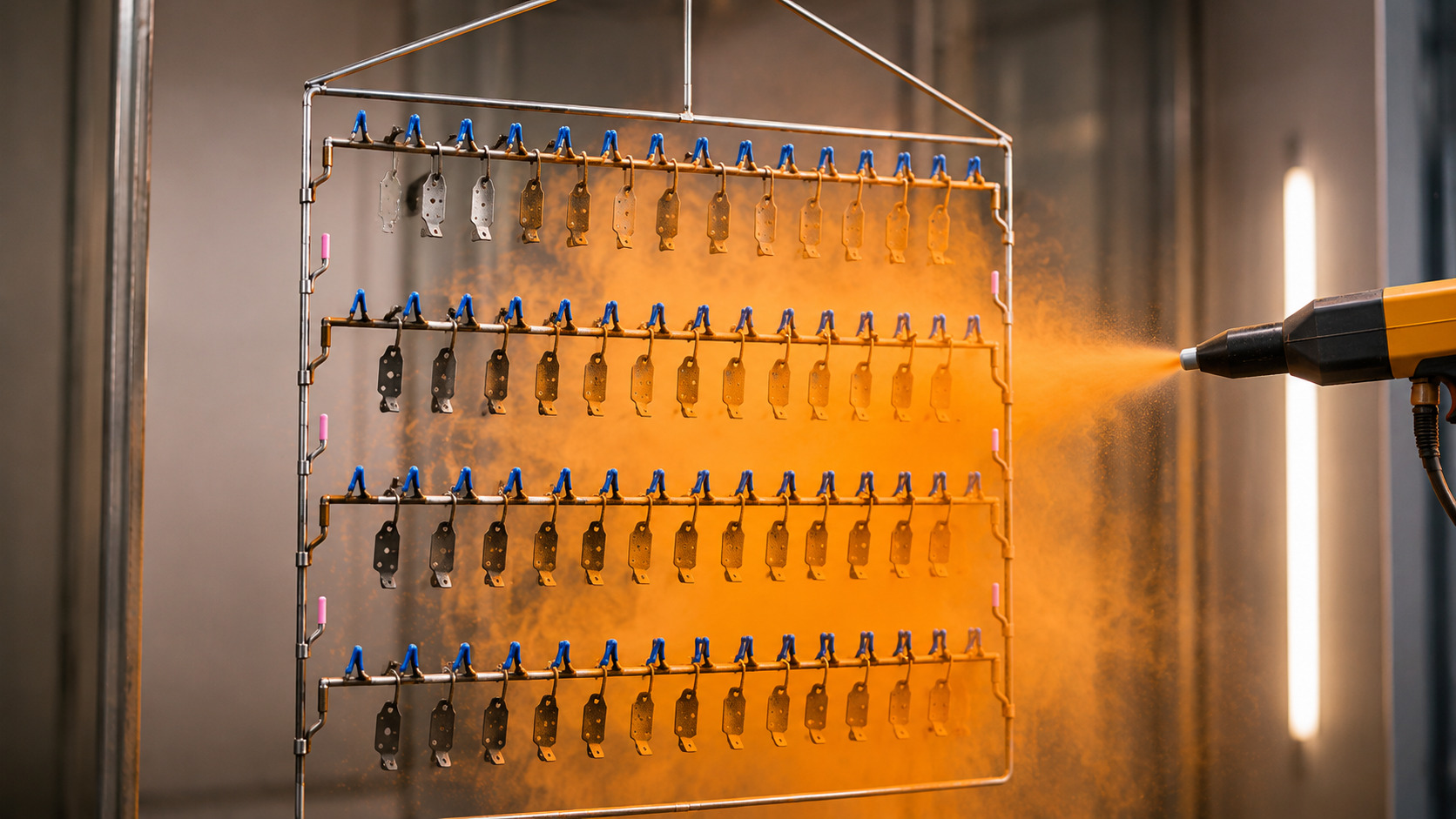
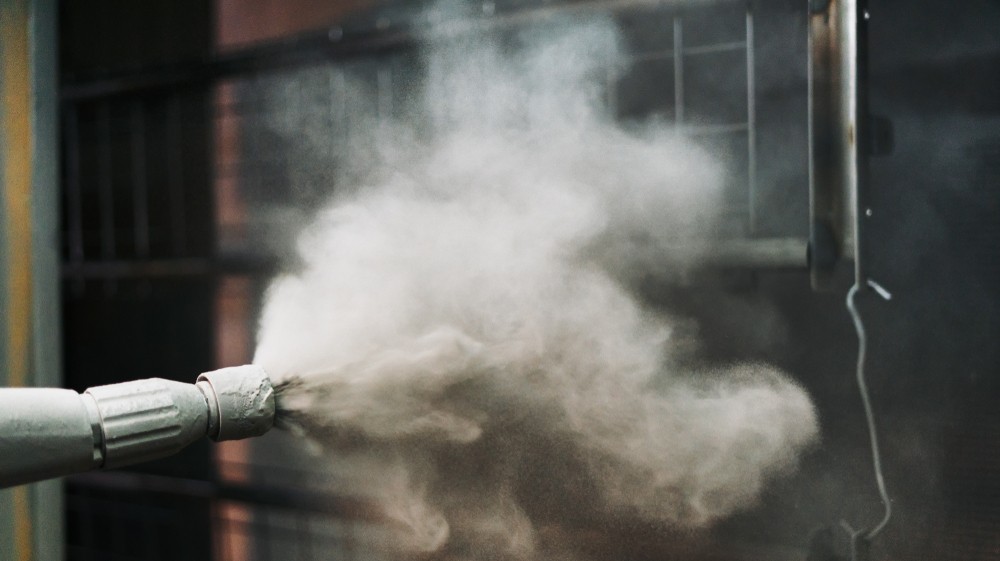
Powder coating works by applying an electrostatic charge to powder particles as they exit the spray gun. These charged particles are attracted to a grounded part, creating the electrostatic forces necessary for powder deposition.
When grounding is functioning properly, powder is attracted efficiently to the part, coverage is more consistent, transfer efficiency improves, powder waste decreases, and rework is minimized.
When grounding is compromised, powder particles lose their attraction to the workpiece. As a result, more powder ends up in the recovery system or surrounding environment rather than adhering to the part.
In simple terms, the stronger and more reliable the grounding path, the more efficiently powder reaches its intended target.
Why Is Grounding Important in Powder Coating?
Grounding impacts nearly every aspect of powder coating performance. Proper grounding can help improve transfer efficiency, reduce powder consumption, improve coating consistency, reduce touch-up and rework, improve edge coverage, reduce Faraday cage effects, increase throughput, and improve first-pass quality.
For many manufacturers, improving grounding is one of the fastest ways to reduce operating costs without making significant capital investments.
What Causes Poor Grounding in Powder Coating?
Several factors can contribute to grounding problems. In many cases, multiple issues exist simultaneously. A finishing line may have worn hooks, coated racks, poor contact points, and weak ground connections all working against the process at the same time.
1. Excessive Coating Build-Up on Hooks
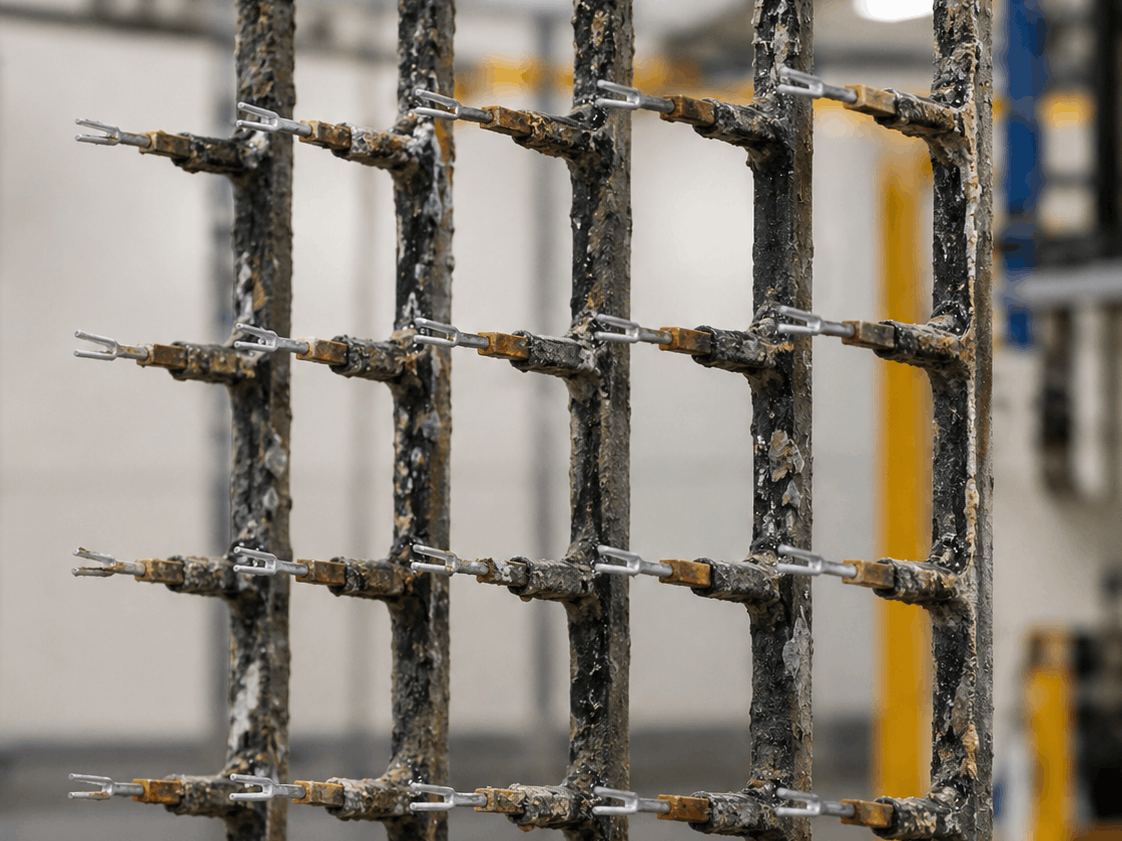
One of the most common causes of grounding problems is powder accumulation on hooks. Over time, hooks develop layers of cured coating that create resistance between the rack and the part.
As build-up increases, electrical conductivity decreases, contact quality deteriorates, and powder attraction becomes inconsistent. Many finishing operations continue using hooks long after they should have been replaced or cleaned. While this may seem cost-effective initially, the resulting reduction in transfer efficiency often costs significantly more than regular hook replacement.
2. Paint Build-Up on Racks
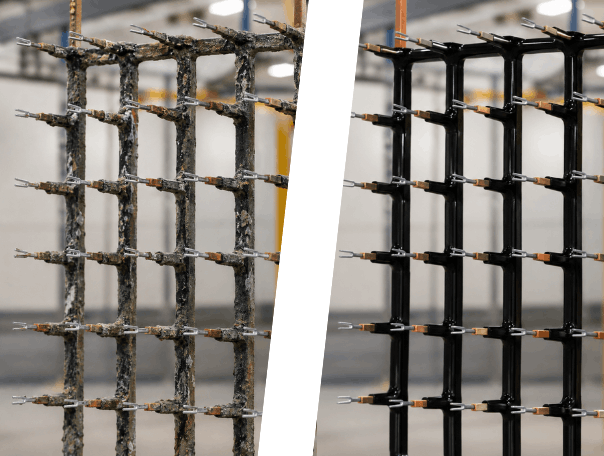
Just like hooks, racks accumulate powder coating over time. As coating layers continue to build, the rack's ability to conduct electricity diminishes. This problem becomes especially severe when racks are not regularly stripped or refurbished, contact points become insulated, or grounding paths become unreliable.
A rack may still appear structurally sound while experiencing significant grounding degradation. Rack refurbishment can help restore conductive pathways, contact point performance, grounding reliability, and loading efficiency.
3. Poor Rack Design
Not all rack designs provide optimal grounding performance. A rack that was originally designed only for loading density or part support may not adequately address electrical conductivity requirements.
Common design-related grounding problems include insufficient contact points, weak electrical pathways, long current travel distances, and inadequate grounding locations. Custom-engineered racks often outperform generic designs because they are developed specifically around part geometry, coating requirements, and production goals.
4. Worn or Damaged Contact Points
Contact points are critical to creating a reliable electrical connection between the rack and the part. Over time, contact points may become bent, damaged, corroded, contaminated, or coated with cured powder.
Even minor degradation can significantly increase electrical resistance. Many grounding problems originate at the exact location where the rack touches the part.
5. Poor Ground Connections Throughout the Line
Grounding issues are not always caused by racks or hooks. The grounding system itself may be compromised. Potential issues include loose connections, corrosion, damaged cables, improper grounding straps, and equipment wear.
If electrical continuity is interrupted anywhere in the grounding path, coating performance can suffer.
6. Contamination at Contact Areas
Oil, dirt, oxidation, rust, and residue can interfere with electrical conductivity. Contamination may originate from part handling, manufacturing processes, environmental conditions, or inadequate pretreatment.
Even small amounts of contamination can create resistance that affects grounding performance. Maintaining clean contact points is essential for consistent results.
.jpg)
What Are the Symptoms of Poor Grounding?
Many coating defects commonly attributed to application settings or powder quality may actually be caused by grounding problems. If your team is seeing inconsistent results even when spray settings, powder, and part preparation remain the same, grounding should be one of the first areas to investigate.
Increased Powder Consumption
When powder is not efficiently attracted to the part, more material is required to achieve target film thickness. This increases material costs and can create more overspray in the booth.
Reduced Transfer Efficiency
A greater percentage of powder becomes overspray rather than adhering to the workpiece. Poor transfer efficiency can slow production and increase reclaim demands.
Uneven Film Build
Grounding inconsistencies can create variations in coating thickness across the part. Operators may see heavy coating in some areas and poor coverage in others.
Bare Spots
Areas with poor conductivity may receive inadequate powder coverage. Bare spots may appear around contact points, corners, recessed areas, or difficult-to-coat surfaces.
Excessive Rework
Operators may need to perform touch-ups or rerun parts through the coating process. Over time, this can create significant labor and production costs.
Inconsistent Quality
Parts from the same production run may exhibit noticeable finish variations when grounding is unreliable from hook to hook or rack to rack.
How Do You Test Powder Coating Grounding?
One of the most effective methods is measuring resistance between the part and earth ground. Testing can help identify worn hooks, coated racks, faulty grounding paths, equipment problems, and weak contact points.
Regular testing provides objective data rather than relying solely on visual inspection. For process engineers and quality teams, this can make grounding a measurable part of process control instead of a guesswork-based maintenance issue.
How Often Should Hooks Be Replaced?
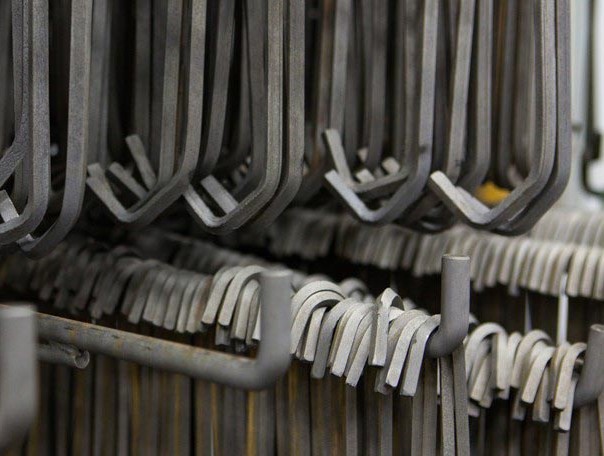
There is no universal replacement interval because operating conditions vary significantly. Factors include coating thickness, production volume, powder type, cleaning practices, hook material, and how critical the contact point is to the part.
However, hooks should be inspected routinely for excessive coating build-up, deformation, damage, and reduced conductivity. Waiting until quality problems emerge often means the hook has already exceeded its useful life.
For high-volume finishing operations, hook replacement should be treated as a planned replenishment activity rather than an emergency fix. Having the right hooks available when they are needed helps reduce downtime and improves finishing consistency.
How Often Should Powder Coating Racks Be Refurbished?
Rack refurbishment schedules depend on production demands and coating accumulation rates. A rack used every day in a high-volume powder coating operation will likely need attention sooner than a rack used occasionally for low-volume jobs.
Warning signs include increasing powder usage, reduced transfer efficiency, coating defects, excessive rack build-up, and grounding inconsistencies.
Many operations benefit from scheduled refurbishment programs that prevent issues before they impact production. Refurbishment can help extend rack life, restore contact performance, and delay the cost of full rack replacement.
How to Improve Grounding in Powder Coating
Improving grounding usually requires a combination of maintenance, inspection, replenishment, and smart rack design. The best approach depends on your parts, coating process, production volume, and current rack condition.
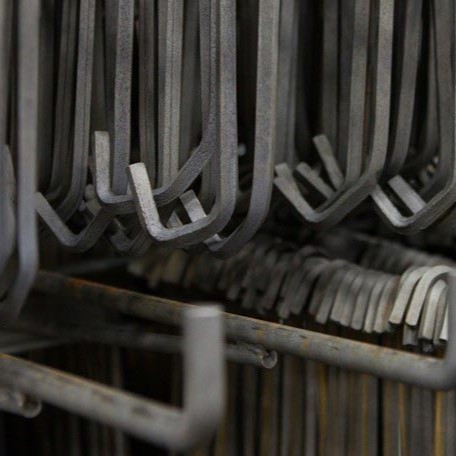
Replace Worn Hooks
Regular hook replenishment helps maintain conductivity and consistent contact between the rack and the part.
Shop Hooks & Hanging Solutions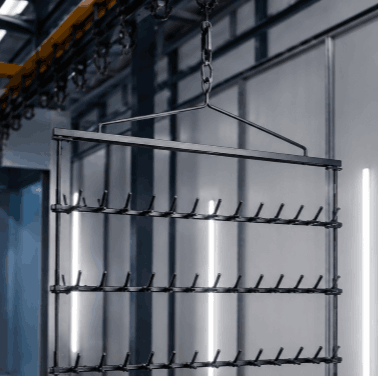
Refurbish Existing Racks
Removing accumulated coating helps restore grounding performance and extend the useful life of existing racks.
Explore Rack Refurbishment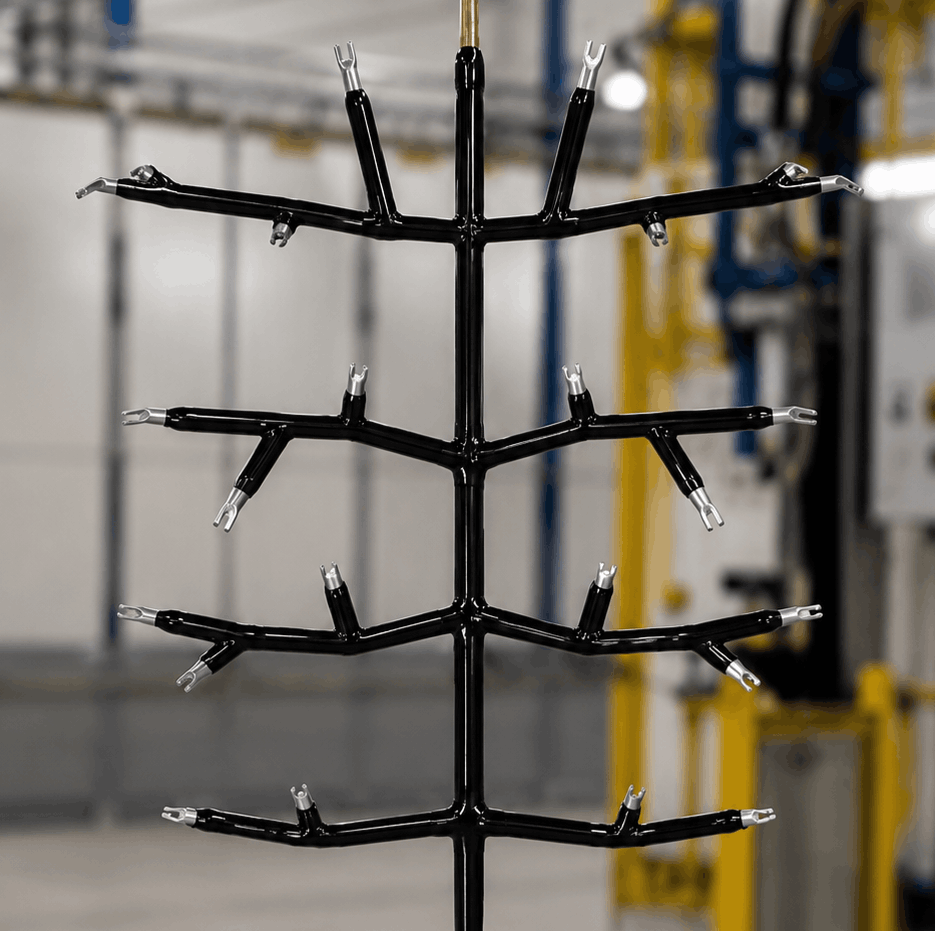
Upgrade Rack Design
Custom-engineered racks can improve both productivity and conductivity by supporting the part and grounding path together.
Discover Custom RackingImplement Preventive Maintenance
Routine inspection and testing help identify grounding problems before they lead to coating defects, rework, or production delays.
Improve Contact Point Design
Well-designed contact points provide reliable conductivity while helping minimize visible coating defects on finished parts.
Verify Ground Connections
Regularly inspect and test the full grounding path, including rack-to-conveyor connections, ground straps, and equipment connections.
The Cost of Ignoring Grounding Problems
Poor grounding affects far more than coating quality. It can increase powder consumption, labor costs, rework, energy usage, production delays, and equipment wear.
In many cases, grounding-related inefficiencies accumulate gradually, making them difficult to recognize until costs become substantial. For manufacturers focused on continuous improvement, grounding should be viewed as a critical process variable rather than a maintenance afterthought.
Frequently Asked Questions
What causes poor grounding in powder coating?
The most common causes include coating build-up on hooks and racks, worn contact points, poor rack design, contamination, and faulty ground connections.
How does grounding affect transfer efficiency?
Strong grounding improves the electrostatic attraction between powder particles and the part, increasing transfer efficiency and reducing waste.
Can old hooks cause powder coating defects?
Yes. Excessive coating build-up on hooks can reduce conductivity and contribute to inconsistent coating quality, bare spots, and increased powder consumption.
How do you improve grounding in powder coating?
Improving grounding typically involves replacing worn hooks, refurbishing racks, maintaining clean contact points, verifying ground connections, and optimizing rack design.
How often should powder coating racks be cleaned or refurbished?
The frequency depends on production volume and coating accumulation, but routine inspection and scheduled refurbishment programs help maintain consistent performance.
Conclusion
Grounding is one of the most important and most frequently overlooked factors in powder coating performance.
When grounding deteriorates, manufacturers often experience increased powder usage, inconsistent quality, reduced transfer efficiency, and higher operating costs. Fortunately, many grounding issues can be addressed through proactive maintenance, hook replacement, rack refurbishment, and improved rack design.
By treating grounding as a critical component of process control rather than a secondary concern, finishing operations can improve coating quality, reduce waste, and increase overall productivity.
See Related Articles
Explore more resources on powder coating, racking, masking, and finishing line performance.
Need help improving grounding performance?
EPSI can help evaluate hooks, racks, contact points, and racking options to support better coating results.