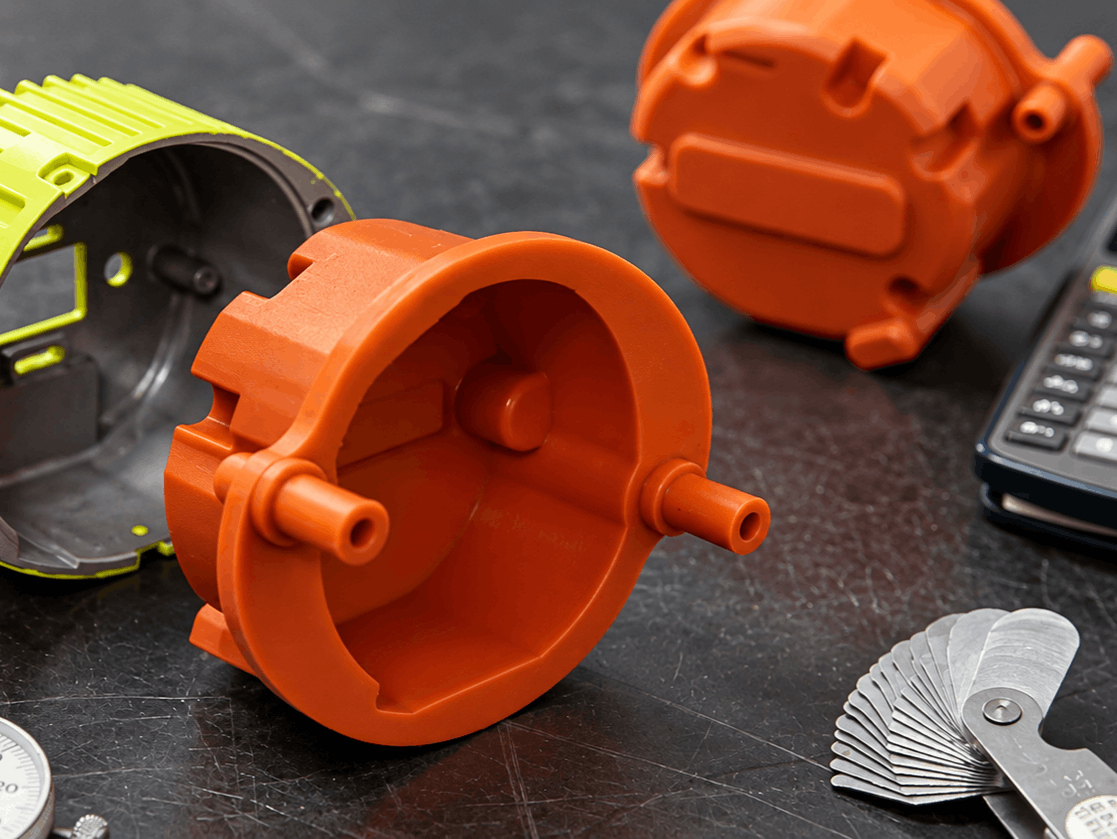
Custom Masking
Custom-molded masking can protect unusual connector openings, complex cutouts, and multiple close-tolerance features in a single repeatable step—helping reduce manual tape work and demasking effort.
Explore Custom Masking
Explore ready-to-use masking and racking solutions designed to help your team get organized, protected, and production-ready faster.
Looking for practical alternatives for industrial finishing? EPSI helps customers move forward with masking solutions engineered for heat, protection, reusability, and process consistency.
Download the latest EPSI technical guide and product reference materials.
Download Technical Guide Guide EspanolConnect with EPSI for help selecting masking, plugs, caps, hooks, racking, and finishing solutions for your application.

.png)
From control enclosures and electronic housings to appliance panels and mounting hardware, keep critical features protected and finishing lines moving with process-matched masking, hooks, and racking from EPSI.
Caps, plugs, tapes, discs, and custom masks help keep fasteners, electrical interfaces, threaded inserts, and sealing areas free of unwanted finish.
Explore MaskingSupport secure hanging, grounding, coating access, and line density for enclosure panels, appliance components, brackets, and fabricated assemblies.
Explore RackingWhen off-the-shelf products slow operators or leave critical features exposed, explore tailored masking and racking for your parts and production method.
Explore CustomExplore masking, hanging, and racking solutions selected for the functional details and handling challenges of electronic housings, appliance components, panels, and fabricated assemblies.
Custom-molded masking can protect unusual connector openings, complex cutouts, and multiple close-tolerance features in a single repeatable step—helping reduce manual tape work and demasking effort.
Explore Custom Masking.png)
Design around enclosure geometry, exposed finish surfaces, contact locations, and line spacing. Custom racks can help stabilize awkward parts while improving access, grounding, and loading efficiency.
Explore Custom Racking
Keep threaded holes, ports, mounting bores, and precision openings clear of coating with plugs selected for fit, processing temperature, and easy removal.
Explore Masking Plugs
Protect studs, pins, tube ends, connectors, and exposed hardware during coating and preparation with caps matched to part geometry and finishing conditions.
Explore Masking Caps
Create defined coating-free zones on flat faces, grounding points, labels, and assembly interfaces with tapes and discs chosen for adhesion, temperature, and clean removal.
Explore Tapes & Discs
Suspend panels, brackets, and appliance components securely with hooks chosen for load, contact location, conveyor compatibility, and dependable electrical continuity.
Explore HooksElectronic enclosures, control cabinets, appliance panels, mounting brackets, and fabricated housings often share a difficult finishing requirement: durable, consistent coverage on exposed surfaces without interfering with assembly, grounding, electrical connections, seals, or dimensional fit.
A coating defect is not always visible on the outside. Powder in a threaded insert can slow assembly. Overspray on a bonding point can interrupt electrical continuity. A poorly positioned rack contact can leave an unwanted mark, while unstable hanging can create uneven presentation and unnecessary rework.
That is why masking and racking should be selected as part of the process—not as last-minute accessories. EPSI helps finishing teams evaluate protection points, temperatures, chemistry, handling, and production volumes, then choose standard or custom solutions that support repeatable results from pretreatment through final assembly.

Choose tooling by evaluating both the coating process and what must still fit, connect, seal, or assemble after finishing.

Record pretreatment chemistry, coating type, cure profile, immersion, blasting, and cleaning conditions before choosing materials.
Mark threaded inserts, connector openings, ground pads, gasket surfaces, hardware interfaces, and assembly tolerances.
Check part weight, orientation, drain paths, coating access, conductive contact points, and conveyor clearances.
Review corners, deep recesses, cutouts, vents, and Faraday-cage-prone areas that can complicate powder coverage.
Compare installation, loading, removal, changeover, and cleaning time—not just the unit price of a cap or hook.
Trial the selected solution under actual conditions; document fit, removal, reuse limits, and stock requirements.
EPSI supplies support coating, pretreatment, protection, and handling requirements across a range of electronic and appliance component finishing operations.
Protect threaded features and grounding areas while holding cabinet panels, brackets, and housings in repeatable positions.
Explore ApplicationSelect masks and hanging methods for immersion exposure, electrical contact, and specified coating-free assembly zones.
Explore ApplicationMaintain clean boundaries on precision hardware, terminals, and functional surfaces where selective deposition matters.
Explore ApplicationMask selected aluminum enclosure and component features while considering bath chemistry and electrical contact needs.
Explore ApplicationShield openings, hardware, and mating interfaces while supporting consistent handling during liquid coating operations
Protect threads, machined surfaces, and delicate connection features during abrasive surface preparation
Keep fastener holes, studs, and threaded inserts clear for reliable appliance and electronics assembly
Guard exposed fittings, ports, and finished interfaces against handling debris before installation or assembly
Continue exploring EPSI products, with electronics and appliance finishing picks to complete your selection.
When enclosure and appliance production depends on the right plug size, cap, tape, disc, or hook, a missing consumable can interrupt preparation, changeovers, and scheduled coating runs. EPSI's Vendor Managed Inventory program can help align replenishment with agreed usage and stocking requirements.
By planning recurring supply needs, teams can spend less time chasing emergency orders and more time maintaining consistent masking and finishing workflows across frequently produced components.
From coating temperatures and connector masking to rack grounding, enclosure geometry, and high-mix production, EPSI can help you narrow the options to a practical finishing solution.
Explore practical guidance on reducing rework, improving throughput, and standardizing masking in powder coating operations.



Practical answers about electronics enclosure coating, appliance powder coating, masking, racking, grounding, custom tooling, and inventory planning.
Common supplies include masking plugs, caps, tapes, discs, hooks, and custom or modular racks. These products help protect functional areas and present components consistently during powder coating, e-coating, wet paint, plating, and other processes. The right combination depends on part geometry, substrate, exposure conditions, required coating boundaries, and assembly needs. A metal enclosure may require different protection than a small stamped bracket.
Masking prevents unwanted coating from reaching areas that must remain electrically conductive, dimensionally accurate, or available for assembly. Typical locations include ground points, threaded inserts, connector openings, gasket seats, and mating surfaces. Coating buildup in these locations can cause extra cleanup or interfere with fit and function. Clearly identifying protected features before finishing helps operators repeat the same boundaries across production runs.
Start with the hole dimensions, thread geometry, required masking depth, and the finish boundary. Next, check the full process exposure, including pretreatment chemistry, coating temperature, cure duration, and removal conditions. A plug must fit securely without damaging threads or becoming difficult to remove. Test candidate sizes on actual parts and confirm that the protected area remains within the assembly specification.
Caps generally cover external features such as studs, pins, exposed threads, and tube ends, while plugs protect internal openings such as bores and threaded holes. Some parts need both. The choice depends on which surface must remain uncoated, the available installation space, and the coating process. Evaluate retention, heat resistance, chemical compatibility, and removal access rather than selecting solely by nominal diameter.
Yes, suitable tapes and die-cut discs can help maintain defined coating-free areas for grounding, bonding, or assembly interfaces. Material selection should consider adhesion to the substrate, pretreatment exposure, cure temperature, edge definition, and residue-free removal requirements. The final electrical connection must still be validated against the product design and applicable specifications. Masking alone does not establish that a completed assembly meets electrical performance requirements.
Racking determines how a cabinet or panel hangs, where it contacts the fixture, and which surfaces are exposed to the spray. Poor orientation can make recesses harder to coat, create contact marks, or reduce loading efficiency. For electrostatic powder coating, the rack also forms part of the grounding path. Well-designed fixtures support stable handling, consistent spacing, effective contact, and repeatable presentation throughout the line.
Electrostatic powder coating relies on a conductive path between the part and ground to attract charged powder. Coating buildup, contaminated hooks, or poorly chosen contact points can weaken that path and contribute to inconsistent transfer. The part may also need separate coating-free bonding points for its finished assembly. These are related but distinct requirements, and both should be reviewed when planning masking and rack maintenance.
Deep corners, narrow openings, louvers, and recessed features can make coating access more difficult, particularly with electrostatic powder application. Part orientation, gun technique, rack spacing, and coating settings all influence results. Masking must also avoid covering areas that need finish. Before committing to production tooling, trial the actual enclosure geometry and inspect both exposed faces and difficult-to-reach surfaces for coverage and appearance.
Custom masking becomes attractive when a part has unusual geometry, multiple adjacent no-coat zones, or repeated manual tape operations. A purpose-designed mask may combine several protection steps and make placement more consistent between operators. The business case should consider tooling cost, production volume, installation and removal time, defect rates, cleaning, and expected reuse. Trials help confirm whether the custom design provides a meaningful operational advantage.
Custom racking can be developed around the shape, weight, and contact requirements of recurring parts, while modular approaches may offer flexibility across changing part families. For high-mix production, the objective is to reduce setup improvisation without sacrificing finish access or load security. Compare fixture changeover time, line density, grounding, storage space, and maintenance needs. A combination of dedicated and adjustable tooling may be appropriate.
Not automatically. Powder coating typically introduces electrostatic application and a thermal cure, while e-coating involves immersion, process chemistry, electrical deposition, and subsequent curing. A mask that performs well in one environment may not retain its seal or withstand exposure in the other. Verify temperature, dwell time, chemical resistance, retention, and removal performance for each process. Qualification should be based on the actual line conditions.
Observe the complete workflow from locating supplies through installation, loading, demasking, and cleanup. Repeated cutting, measuring, searching, or difficult removal can consume more labor than expected. Standardized mask sizes, preconfigured kits, clear work instructions, and application-specific designs may simplify the sequence. Measure touch time per part before and after changes, then account for rework and consumable use to evaluate the full impact.
Protection needs depend on the part, surface finish, exposure period, and handling environment. Caps and plugs may shield openings, threads, and fittings from debris or incidental damage, while packaging materials protect larger cosmetic surfaces. Confirm that temporary protective products will not mark the coating or leave unwanted residue. Consider how parts are stacked, transported, identified, and unpacked so the protection method supports the next assembly step.
Vendor Managed Inventory can support agreed stock levels for frequently consumed caps, plugs, tapes, discs, and other finishing supplies. It is particularly useful when many part numbers depend on a predictable assortment of masking sizes. Planned replenishment may reduce last-minute orders, purchasing workload, and shortages that interrupt preparation. The program should be configured around actual consumption, lead times, stocking locations, and production variability.
Share a part drawing or photos, the features that must remain uncoated, the substrate, and the finishing process. Include cure temperatures, chemistry, production quantities, current tooling, conveyor or fixture limits, and any assembly or electrical contact requirements. Explain the problem you want to solve, such as poor retention, excess touch time, inconsistent grounding, or rework. This context helps identify practical standard or custom options.