

.png)
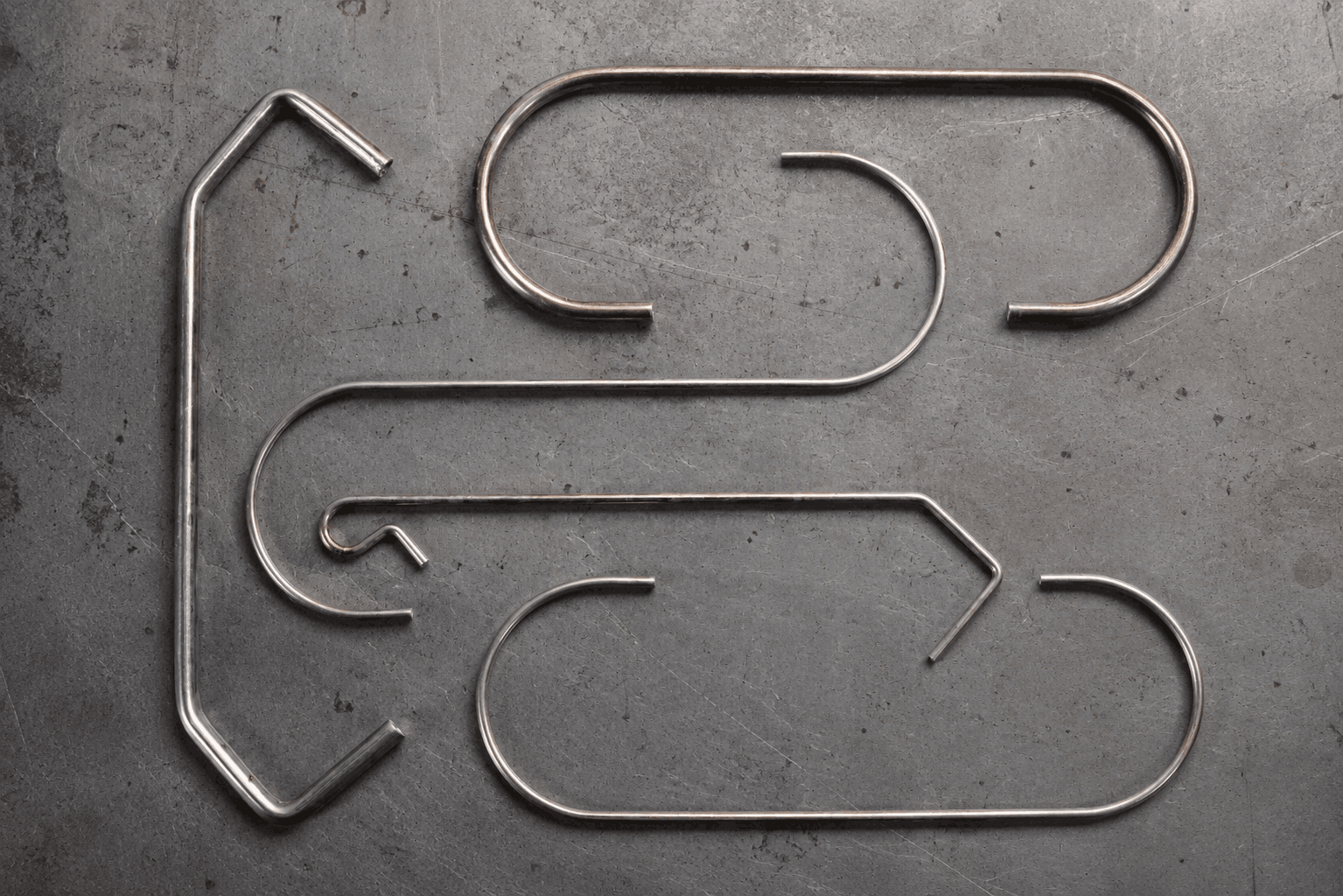
The 5-Minute Hook Health Check: A Simple Inspection That Can Help Prevent Costly Finishing Problems
In every powder coating, e-coat, anodizing, and surface finishing operation, there are components that receive a lot of attention—ovens, spray guns, conveyors, pretreatment systems, and coatings themselves.
Then there are hooks.
Hooks are among the hardest-working components on a finishing line, yet they are often one of the last things to be inspected. Because they do not have motors or moving parts, it is easy to assume they are performing properly until one becomes visibly damaged or fails.
The reality is that hooks gradually change over time. Coating buildup, mechanical wear, heat exposure, corrosion, repeated loading cycles, and improper handling can all affect performance long before a hook becomes unusable.
Those small changes may contribute to grounding problems, inconsistent part presentation, rework, slower loading, finish defects, and unnecessary downtime.
The good news: identifying many common hook problems does not require a lengthy shutdown. A quick five-minute inspection can reveal warning signs before they become costly production issues.
Why Hook Condition Matters
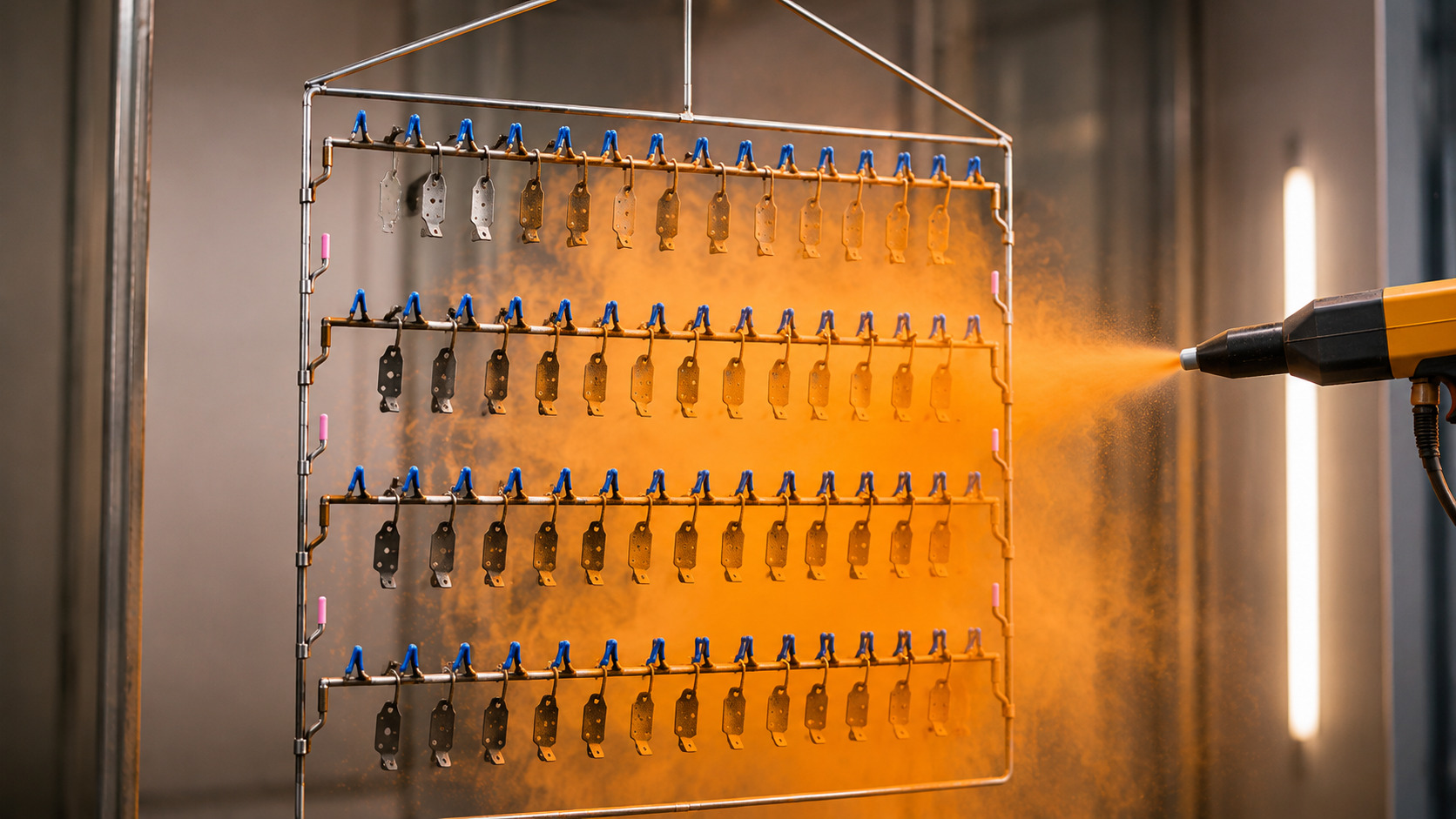
Hooks do far more than simply suspend parts during the finishing process. They help secure parts throughout production, maintain consistent orientation, provide electrical contact where grounding is required, support repeatable coating results, and keep parts moving efficiently through the line.
When hooks begin to deteriorate, each of these functions may be affected. A single worn hook may seem insignificant, but the impact can multiply quickly across dozens or hundreds of hanging points.
Routine inspections help operators and maintenance teams identify developing issues before they affect production.
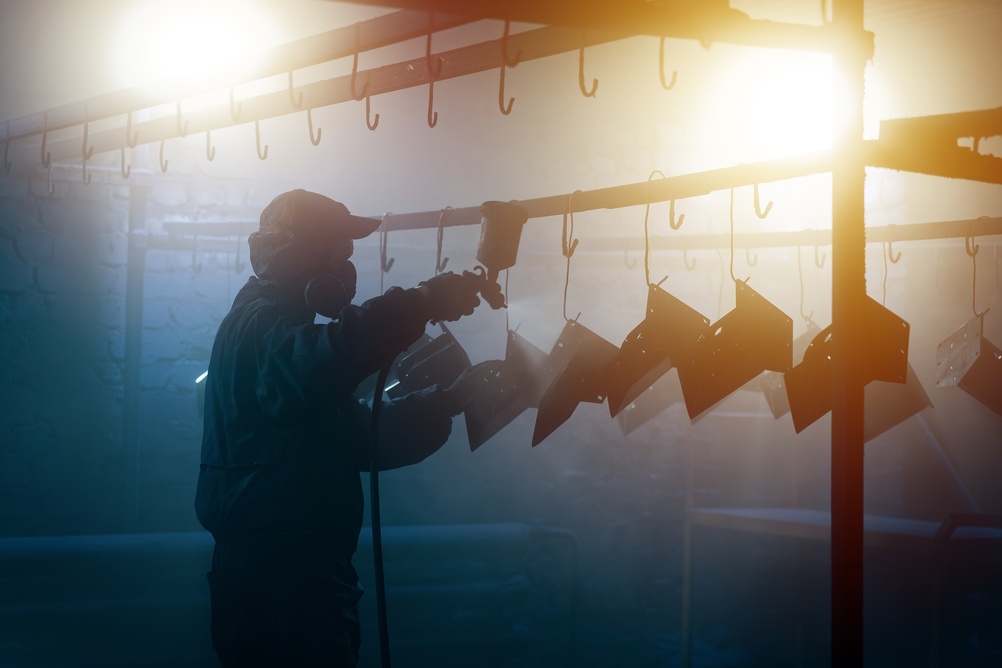
How to Perform the 5-Minute Hook Health Check
Select a representative sample of hooks currently in service. Include hooks from different areas of the line, different racks, and different production applications when possible.
Then inspect each hook for the following four conditions.
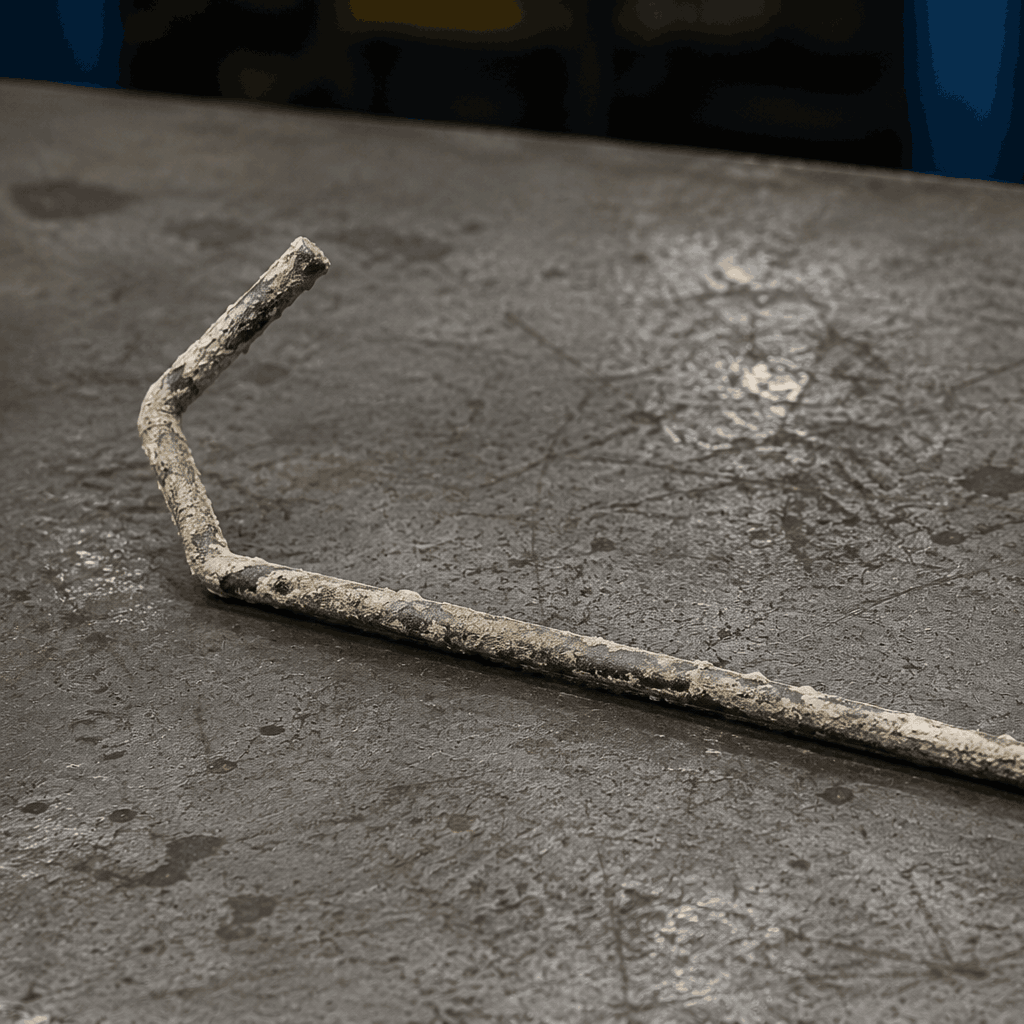
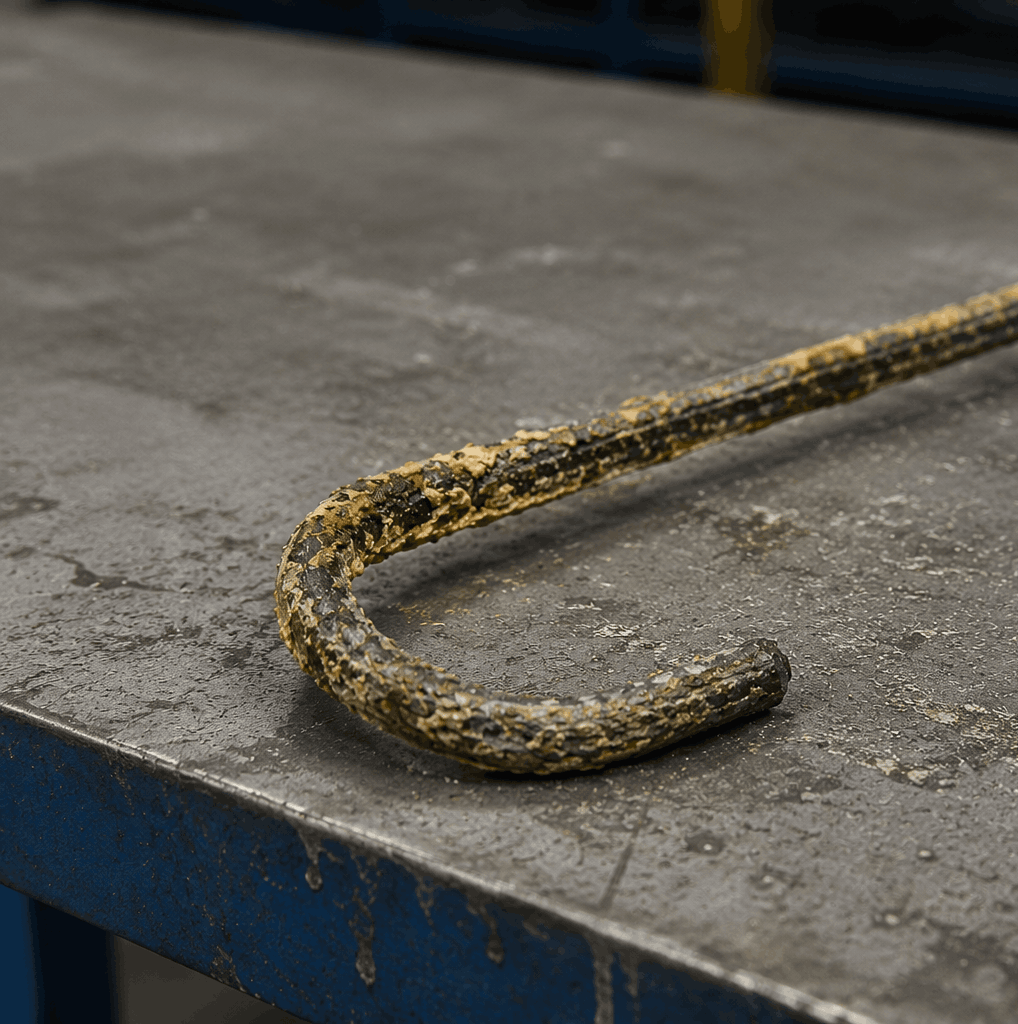
Excessive Coating Buildup
Repeated production cycles can leave layers of cured powder or paint on hooks. Some buildup is expected, but excessive accumulation can interfere with electrical contact and change the effective shape of the hook.
- Thick or uneven coating layers
- Flaking or peeling buildup
- Contact areas with no exposed metal
- Hooks that have become difficult to load
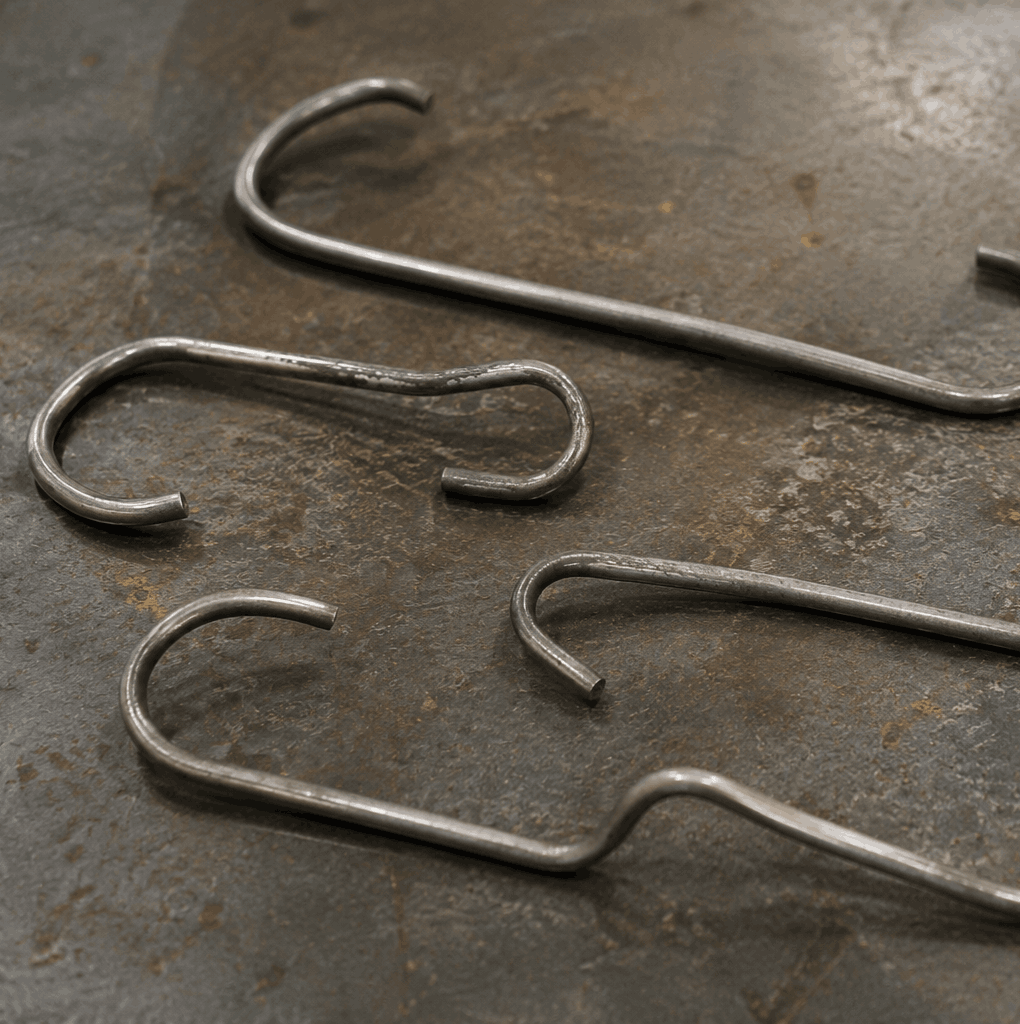
Bent or Misshapen Hooks
Hooks are designed with specific geometry to support and position parts correctly. Overloading, impacts, improper handling, and repeated use can distort that geometry.
- Bent arms or opened ends
- Twisted or uneven wire
- Changes in spacing or shape
- Hooks that no longer position parts correctly
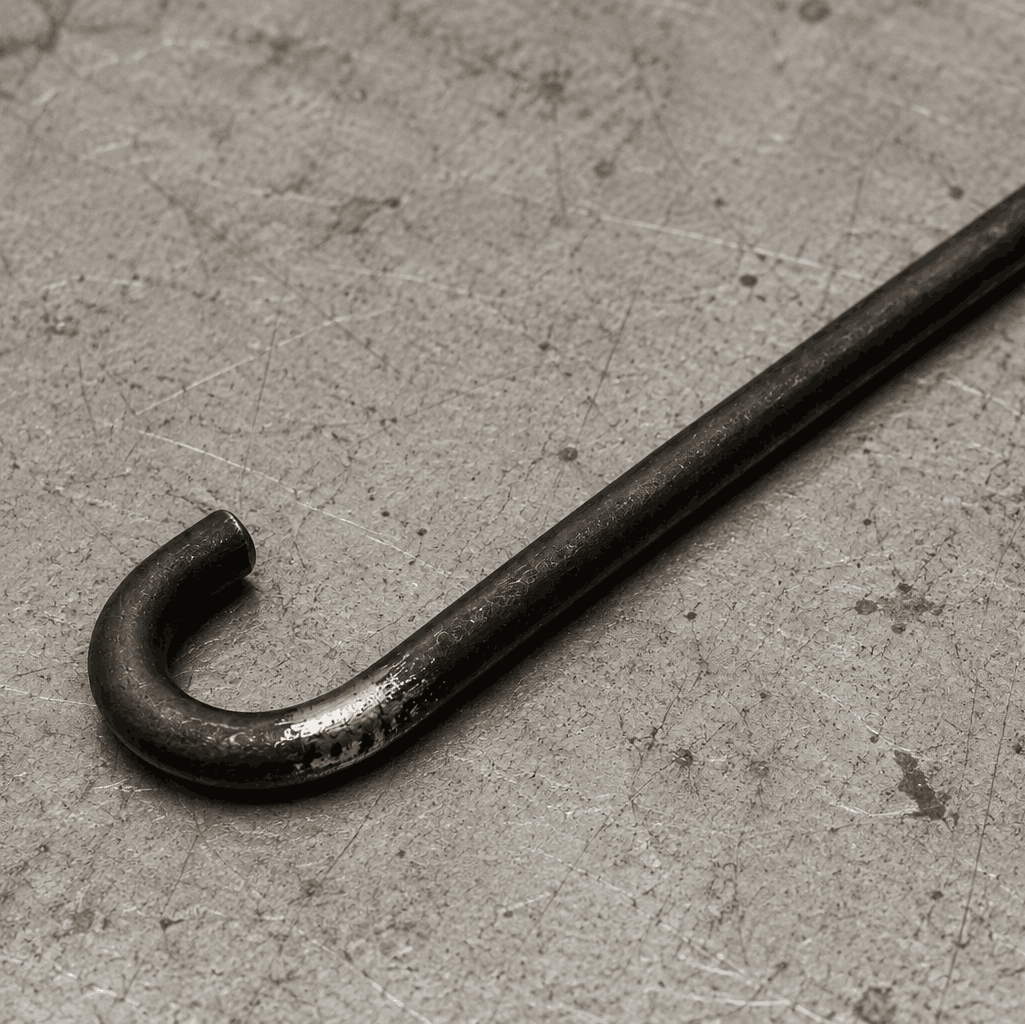
Wear at Contact Points
The locations where a hook contacts the conveyor, rack, or part typically experience the greatest friction. Over time, the material may become flattened, grooved, polished, or thinner.
- Flattened or shiny areas
- Grooves or thin spots
- Visible metal loss
- Contact points that feel unstable
Heat Damage or Corrosion
Hooks operate in environments that may expose them to elevated temperatures, chemicals, moisture, and thermal cycling. These conditions can gradually weaken the material.
- Rust, corrosion, or pitting
- Heat discoloration
- Cracks or fractures
- Brittle or weakened-looking areas
What Should You Do When You Find a Problem?
The right response depends on the condition of the hook and the requirements of your process. Some hooks may be cleaned and returned to service, while others should be replaced immediately.
Consider removing a hook from service when it is structurally damaged, heavily corroded, excessively worn, permanently distorted, or unable to maintain secure and consistent part presentation.
When coating buildup is the primary problem, the hook may be a candidate for cleaning or stripping if the underlying material remains in good condition. However, cleaning should not be used to extend the life of a hook that has already become thin, cracked, bent, or weakened.
A clean hook is not automatically a healthy hook. Always evaluate both the surface condition and the underlying shape, strength, and contact points.
How Often Should Powder Coating Hooks Be Inspected?
There is no single inspection interval that works for every finishing operation. Production volume, coating thickness, cleaning methods, part weight, hook material, process temperatures, and contact requirements can all influence hook life.
Depending on the application, inspections may be incorporated into weekly maintenance, monthly reviews, scheduled shutdowns, rack changeovers, or high-volume production checks.
Operations that coat heavy parts, run multiple shifts, experience rapid coating buildup, or depend heavily on electrical contact may benefit from more frequent inspections.
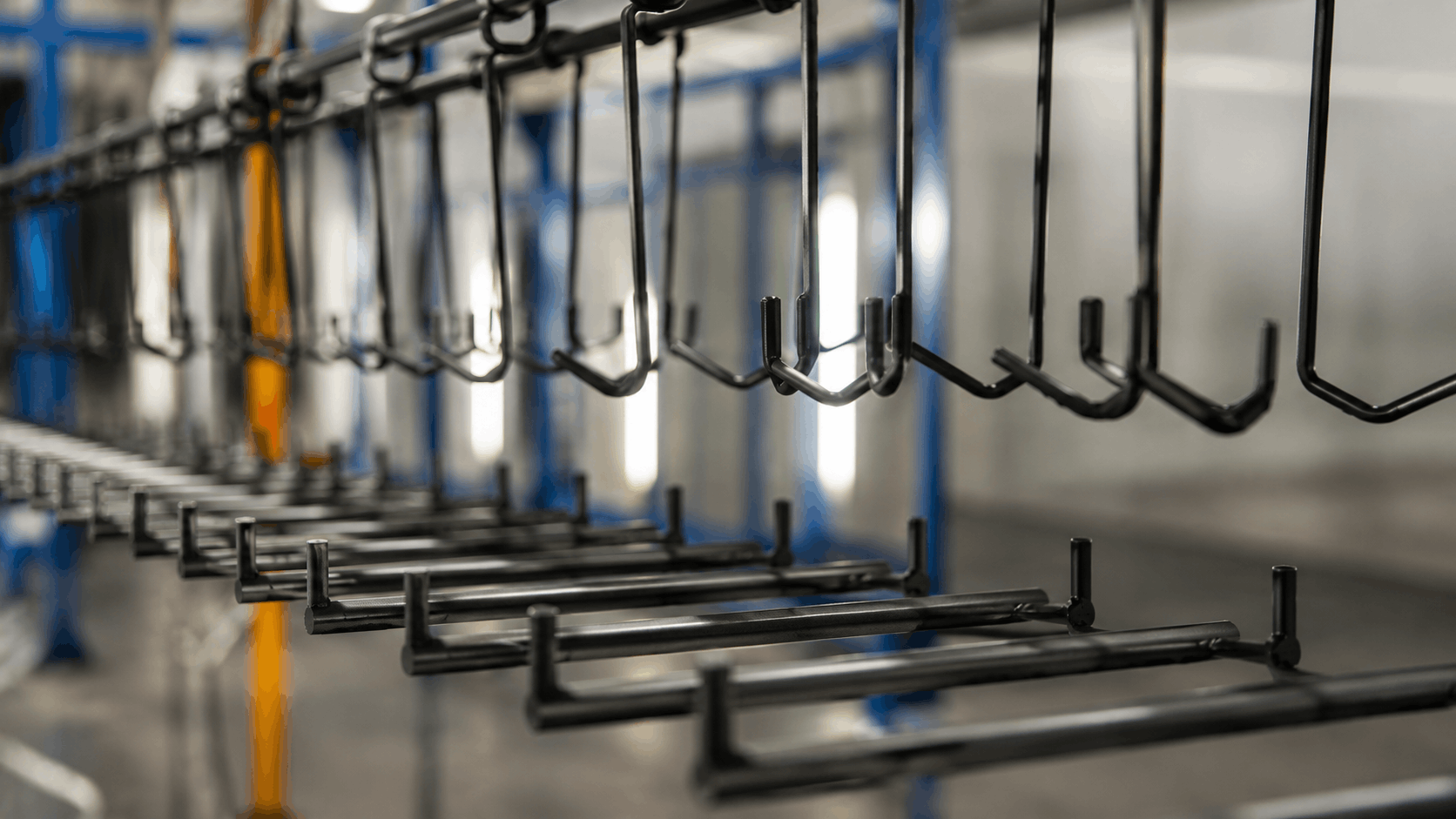
Turn the Inspection Into a Preventive Maintenance Routine
A five-minute inspection is most valuable when it becomes part of an ongoing process rather than a one-time activity.
Consider creating a simple routine that includes:
- Inspecting hooks from multiple points on the line
- Separating questionable hooks from ready-to-use inventory
- Recording recurring wear patterns
- Keeping replacement hooks near the production area
- Reviewing whether the current hook design fits the application
- Checking racks, crossbars, and hanging points at the same time
Tracking recurring issues can also reveal broader process problems. For example, repeated bending may indicate overloading, frequent coating buildup may suggest that rotation or stripping schedules need adjustment, and uneven wear may point to poor load distribution.
Do Not Forget the Rest of the Hanging System
Hooks do not operate independently. While performing the Hook Health Check, take a few additional minutes to inspect the racks, crossbars, conveyor connections, and hanging points supporting them.
Look for bent rack components, loose connections, damaged attachment points, excessive coating accumulation, corrosion, and signs of structural wear.
The entire hanging system works together. Maintaining every component helps support better grounding, more consistent part presentation, easier loading, and reliable production performance.
Take the Guesswork Out of Hook Replenishment
Running out of hooks can slow production and create unnecessary stress. EPSI's Vendor Managed Inventory (VMI) program helps ensure you have the right hooks when you need them by proactively managing inventory and replenishing stock—saving time, reducing downtime, and simplifying your purchasing process.
Explore EPSI VMIWhen Is It Time to Reevaluate Your Hook Design?
Frequent hook damage is not always just a maintenance problem. It may indicate that the hook is not well matched to the application.
A different wire diameter, material, length, shape, contact point, or loading orientation may improve hook life and overall performance. Custom hooks can be designed around part geometry, weight, required contact location, rack spacing, and finishing process requirements.
If operators are constantly bending hooks back into shape, repositioning parts, or replacing the same style of hook, it may be time to evaluate whether a better design is available.
The Cost of Ignoring Worn Hooks
Hooks may be relatively small components, but the consequences of poor hook performance can be much larger.
Potential costs include increased rework, inconsistent coating quality, poor grounding, slower loading, damaged parts, reduced line density, unplanned downtime, and unnecessary operator intervention.
Because these losses often accumulate gradually, they may not be immediately attributed to hooks. Routine inspection helps make hook condition a visible, manageable part of process improvement.
Small Components. Big Impact.
Hooks may be among the smallest components on your finishing line, but they can have an outsized influence on productivity, coating quality, grounding, and process consistency.
Spending just five minutes inspecting your hooks can help uncover problems before they become costly production issues. Over time, those small inspections can contribute to fewer interruptions, more consistent results, and a more reliable finishing process.
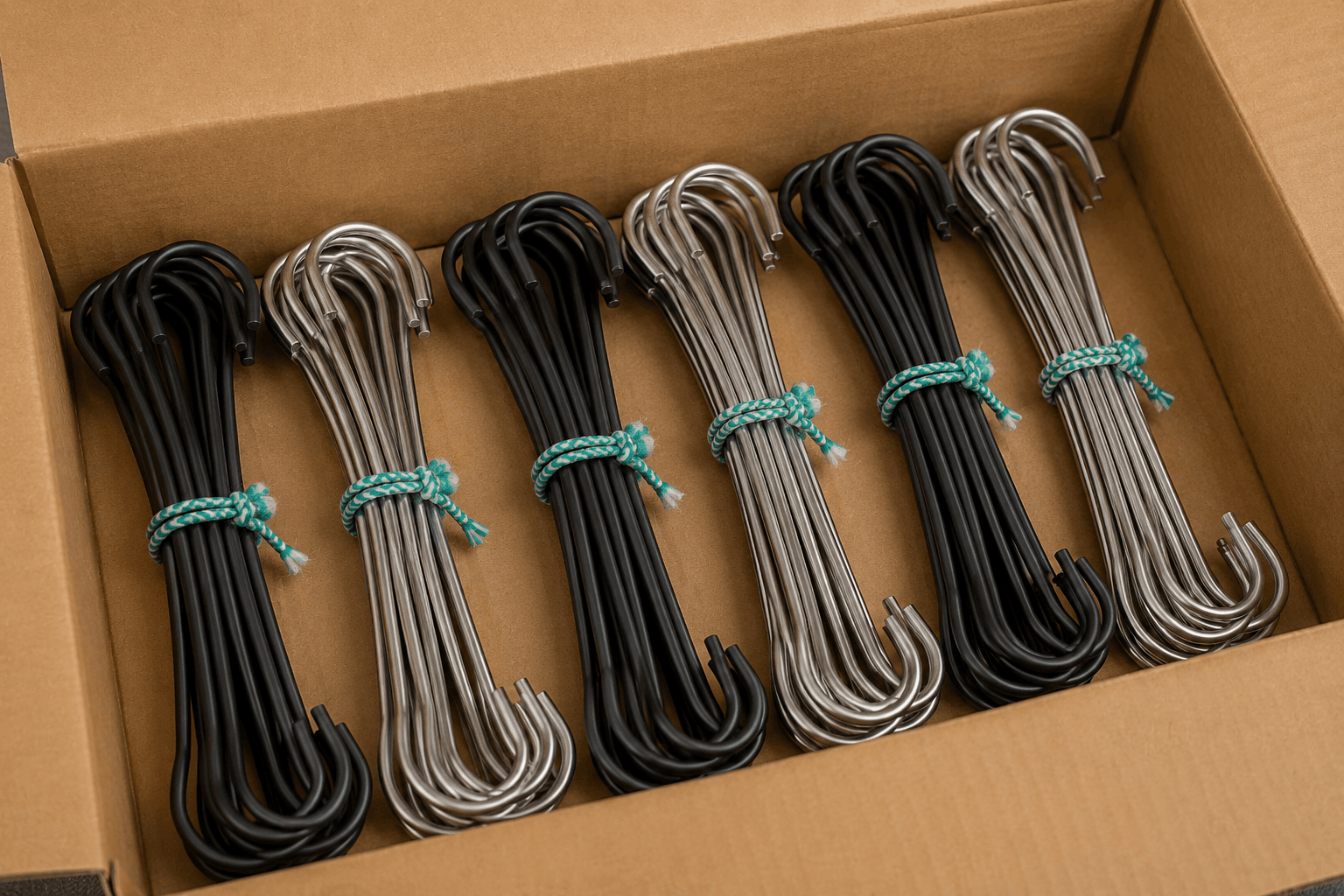
If your inspection reveals worn, damaged, or heavily coated hooks, EPSI offers standard and custom hooks, racking solutions, rack refurbishment services, and inventory management programs to help keep your operation running efficiently. Explore these services below!
Frequently Asked Questions
How do I know when a powder coating hook needs to be replaced?
Replace or remove a hook from service when it is excessively worn, bent, cracked, corroded, weakened, unable to hold parts securely, or no longer providing reliable contact.
Can coating buildup on hooks affect grounding?
Yes. Thick layers of cured coating can insulate contact areas and increase resistance between the rack, hook, and part, which may contribute to inconsistent grounding and coating performance.
How often should finishing hooks be inspected?
The correct frequency depends on production volume, process conditions, part weight, coating buildup, and hook design. Many operations include hook inspection in weekly or monthly preventive maintenance routines.
Can bent hooks affect coating quality?
Yes. Bent or distorted hooks can change part orientation, spacing, and stability. This may affect coating coverage, part presentation, loading consistency, and finish quality.
Should worn hooks be cleaned or replaced?
Hooks with coating buildup may be cleaned if the underlying material remains strong and correctly shaped. Hooks that are thin, cracked, corroded, permanently bent, or structurally weakened should be replaced.
Can EPSI help manage replacement hook inventory?
Yes. EPSI's Vendor Managed Inventory program can help monitor inventory levels and replenish hooks before supplies run low, reducing stockouts and simplifying purchasing.
See Related Articles
Explore more resources on grounding, powder coating, racking, and finishing line performance.
What did your Hook Health Check reveal?
EPSI can help you replace worn hooks, improve hook design, simplify replenishment, and evaluate the complete hanging system.