

.png)
When Should Powder Coating Hooks Be Replaced?
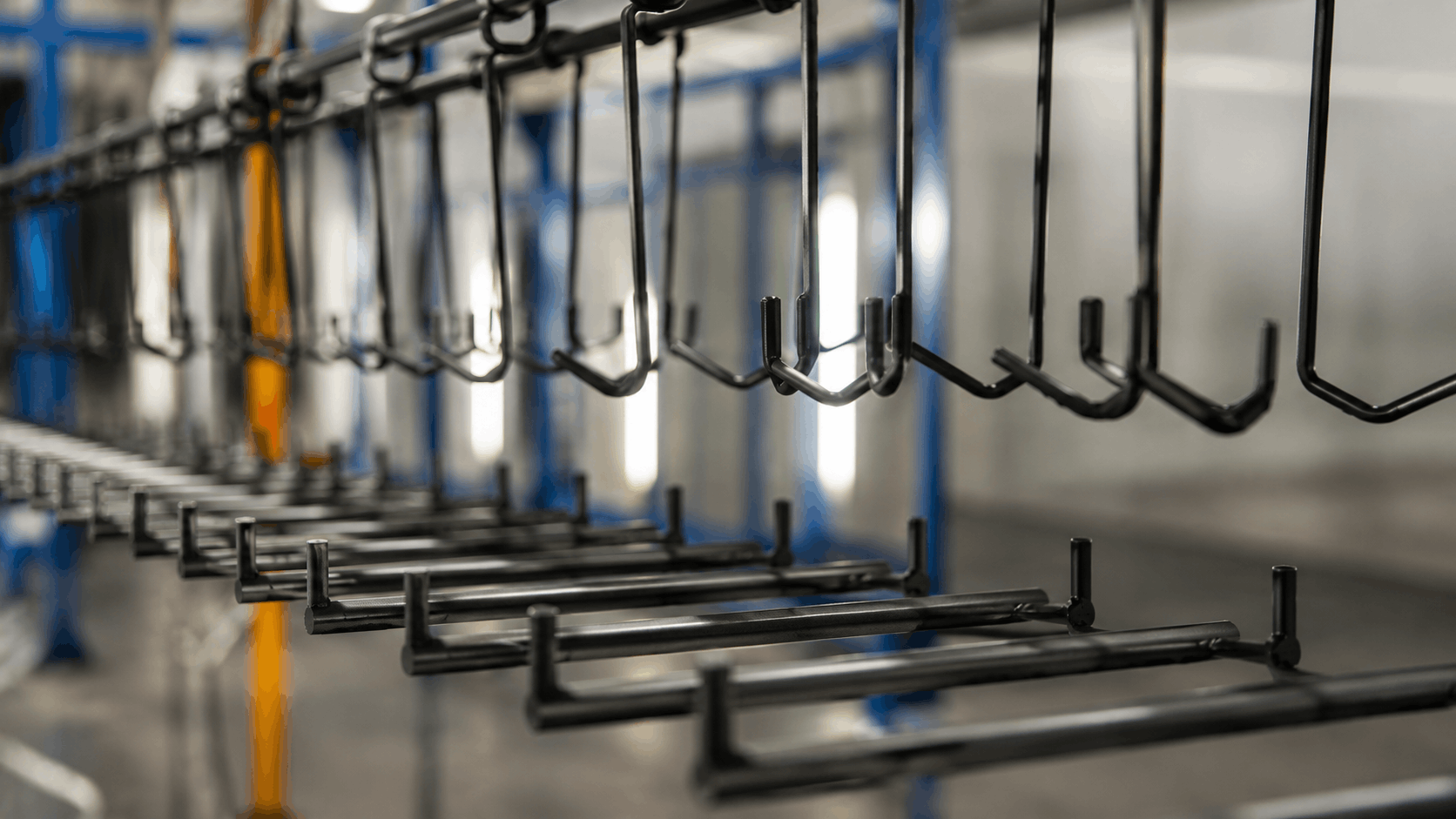
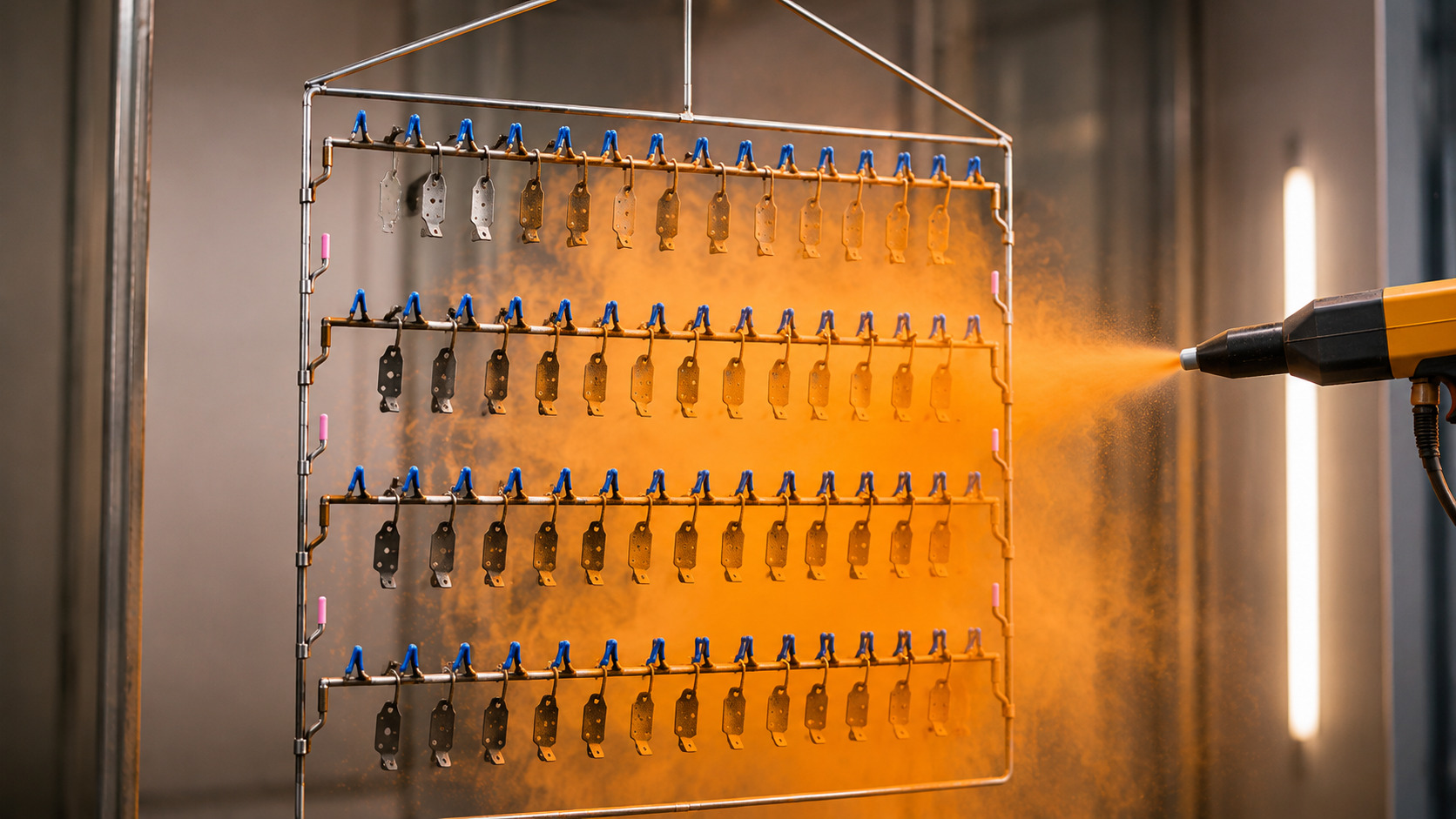
Powder coating hooks are small components, but they have a major impact on coating quality, grounding, transfer efficiency, and production consistency. Every hook on a finishing line is responsible for holding the part securely while also helping maintain the electrical connection required for electrostatic powder application.
Because hooks are used repeatedly through coating, curing, loading, unloading, and cleaning cycles, they eventually wear out. The challenge is that hook wear is not always obvious at first. A hook may still look usable while quietly causing poor grounding, increased powder consumption, uneven coating, or more frequent touch-ups.
For powder coating operations, knowing when to replace hooks can help reduce rework, improve first-pass quality, and keep production moving efficiently.
Key Takeaways
- Powder coating hooks should be replaced when cleaning no longer restores reliable grounding or when physical wear affects performance.
- Worn hooks can reduce transfer efficiency, increase powder consumption, and lead to coating defects.
- Common warning signs include coating buildup, bent hooks, worn contact points, poor grounding, and increased touch-ups.
- Regular inspections help identify worn hooks before they impact production quality.
- Replacing hooks is often far less expensive than the hidden costs of rework, scrap, and lost productivity.
Why Powder Coating Hooks Matter
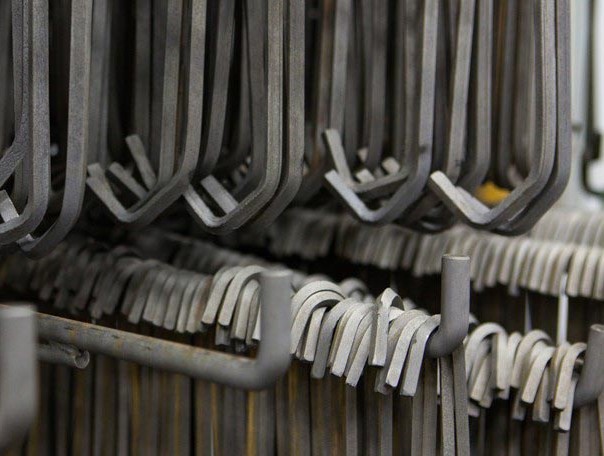
Every powder coating hook performs two important functions. First, it supports the part through the finishing process. Second, it helps create the grounding path that allows charged powder particles to be attracted to the part surface.
When hooks are clean, properly shaped, and conductive, they help maintain stable contact between the part and the rack. This supports better powder attraction, more consistent film build, and improved transfer efficiency. When hooks are worn, coated, bent, or damaged, that contact can become unreliable.
Many finishing defects that appear to be caused by powder, spray settings, or operator technique may actually begin at the hook. If the hook cannot support proper grounding or repeatable part positioning, the entire coating process becomes harder to control.
Reliable hooks support better finishing results
Well-maintained hooks can help improve grounding, reduce powder waste, support consistent part spacing, improve line loading, reduce rejects, and lower the amount of touch-up required after coating.

What Causes Powder Coating Hooks to Wear Out?
Powder coating hooks are exposed to demanding production conditions. They move through spray booths, curing ovens, unloading areas, cleaning processes, and repeated handling. Over time, that use affects both the hook surface and the hook shape.
Powder buildup
Each coating cycle can leave powder on the hook. As cured coating accumulates, the hook becomes less conductive. Heavy buildup can act as an insulator between the rack and the part, weakening the grounding path and reducing transfer efficiency.
Mechanical wear
Hooks are loaded and unloaded repeatedly. Parts may rub against contact points, operators may adjust hooks by hand, and heavier parts can place stress on the hook geometry. Over time, this can cause hooks to bend, flatten, round off, or lose their original shape.
Heat exposure
Hooks travel through curing ovens over and over again. Repeated heating and cooling cycles can contribute to fatigue, discoloration, and gradual weakening of the material.
Cleaning and burn-off cycles
Cleaning helps remove coating buildup, but it does not make hooks last forever. Burn-off, blasting, scraping, and other cleaning methods can slowly wear down the base metal. Eventually, the hook may be clean but still too worn to perform reliably.
Signs Your Powder Coating Hooks Need Replacement
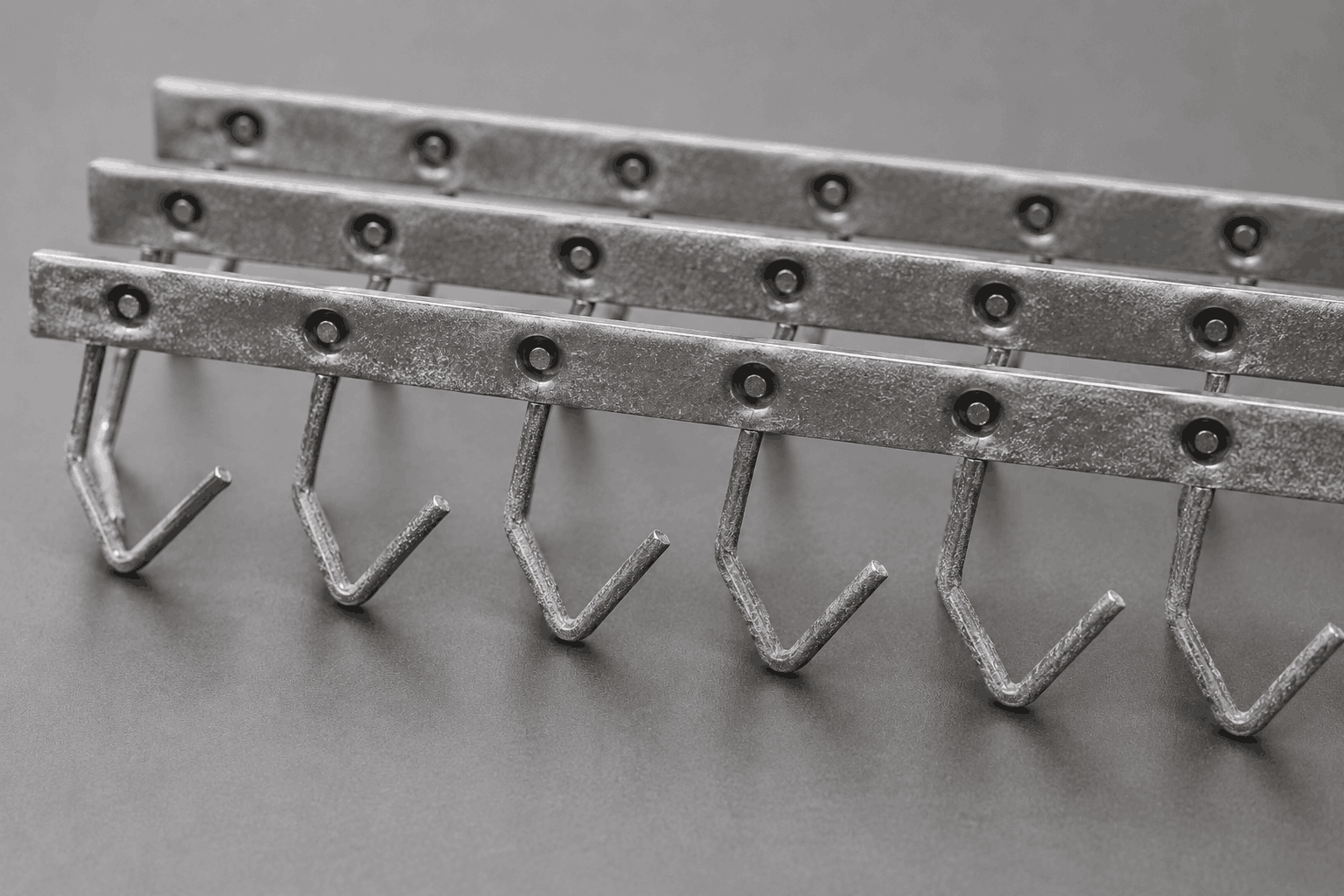
Replacing hooks at the right time requires a combination of visual inspection, process monitoring, and quality tracking. If your finishing line is experiencing more coating defects, inconsistent grounding, or increased powder usage, hooks should be part of the troubleshooting process.
1. Heavy coating buildup
If hooks are covered in cured powder, they may no longer provide strong electrical contact. This is especially important at the point where the part touches the hook. Even if the hook appears usable, coating buildup can reduce conductivity and weaken powder attraction.
2. Poor grounding after cleaning
If grounding performance does not improve after hooks are cleaned, replacement is usually the better option. Cleaning removes coating buildup, but it cannot restore worn metal, damaged contact points, or distorted hook geometry.
3. Bent or distorted hooks
Hooks that are bent out of shape can change how parts hang on the rack. Poor positioning can reduce spray coverage, create part-to-part contact, or cause inconsistent coating thickness.
4. Worn contact points
The small surface area where the hook contacts the part is critical. If this point becomes rounded, flattened, coated, or damaged, grounding can become unreliable.
5. Increased touch-ups and rework
If operators are spending more time correcting bare spots, uneven coating, or inconsistent finish quality, worn hooks may be contributing to the problem.
6. Reduced transfer efficiency
When powder is not efficiently attracted to the part, more material becomes overspray. This increases powder usage and can slow production.
7. Operators constantly adjusting hooks
If employees regularly bend hooks back into shape or compensate for poor part positioning, those hooks may be past their useful life.
How Often Should Powder Coating Hooks Be Replaced?
There is no universal replacement schedule for powder coating hooks. Hook life depends on production volume, part weight, coating thickness, cleaning frequency, oven temperature, hook material, and how important the hook contact point is to grounding.
Instead of replacing hooks strictly by calendar date, many finishing operations use a condition-based replacement approach. This means hooks are inspected regularly and replaced when they no longer support reliable grounding, proper part positioning, or consistent coating quality.
High-volume finishing operations may need to replace hooks more frequently than lower-volume batch operations. Lines running heavy parts, thick coatings, or frequent color changes may also see faster hook wear.
Replace hooks when cleaning is no longer enough
Cleaning is useful when buildup is the primary problem. Replacement is recommended when hooks remain poorly conductive after cleaning, when contact points are worn, or when the hook has lost its original shape.
Should You Clean Hooks or Replace Them?
Cleaning and replacement both have a place in hook maintenance. The key is knowing when cleaning still adds value and when replacement is the more cost-effective choice.
| If you notice... | Cleaning May Be Enough | Replacement Is Recommended |
|---|---|---|
| Light powder buildup | Yes | No |
| Heavy coating buildup after only a few runs | No | Yes |
| Bent hooks | No | Yes |
| Rounded or worn contact points | No | Yes |
| Poor grounding after cleaning | No | Yes |
| Loose or fatigued hooks | No | Yes |
| Minor coating accumulation | Yes | No |
| Frequent reshaping by operators | No | Yes |
| Transfer efficiency restored after cleaning | Yes | No |
| Visible cracking or deformation | No | Yes |
Best Practices for Extending Hook Life
Hook replacement is important, but so is maximizing the life of each hook. A structured maintenance approach helps finishing teams reduce waste, prevent downtime, and keep quality more consistent.
Rotate Hook Inventory
Using multiple hook sets helps distribute wear and gives hooks time to be cleaned, inspected, and returned to service without slowing production.
Inspect During Preventive Maintenance
Review hooks during scheduled maintenance so worn parts are identified before they create coating defects or production delays.
Avoid Excessive Mechanical Cleaning
Aggressive grinding, scraping, or blasting may remove coating buildup, but it can also wear down base metal and shorten hook life.
Replace Individual Hooks Early
Do not wait for an entire rack to become a problem. Replacing worn hooks individually can prevent larger quality issues.
Maintain Rack Grounding
Even new hooks cannot perform well if the rack itself is heavily coated, damaged, or poorly grounded.
Keep Replacement Hooks Available
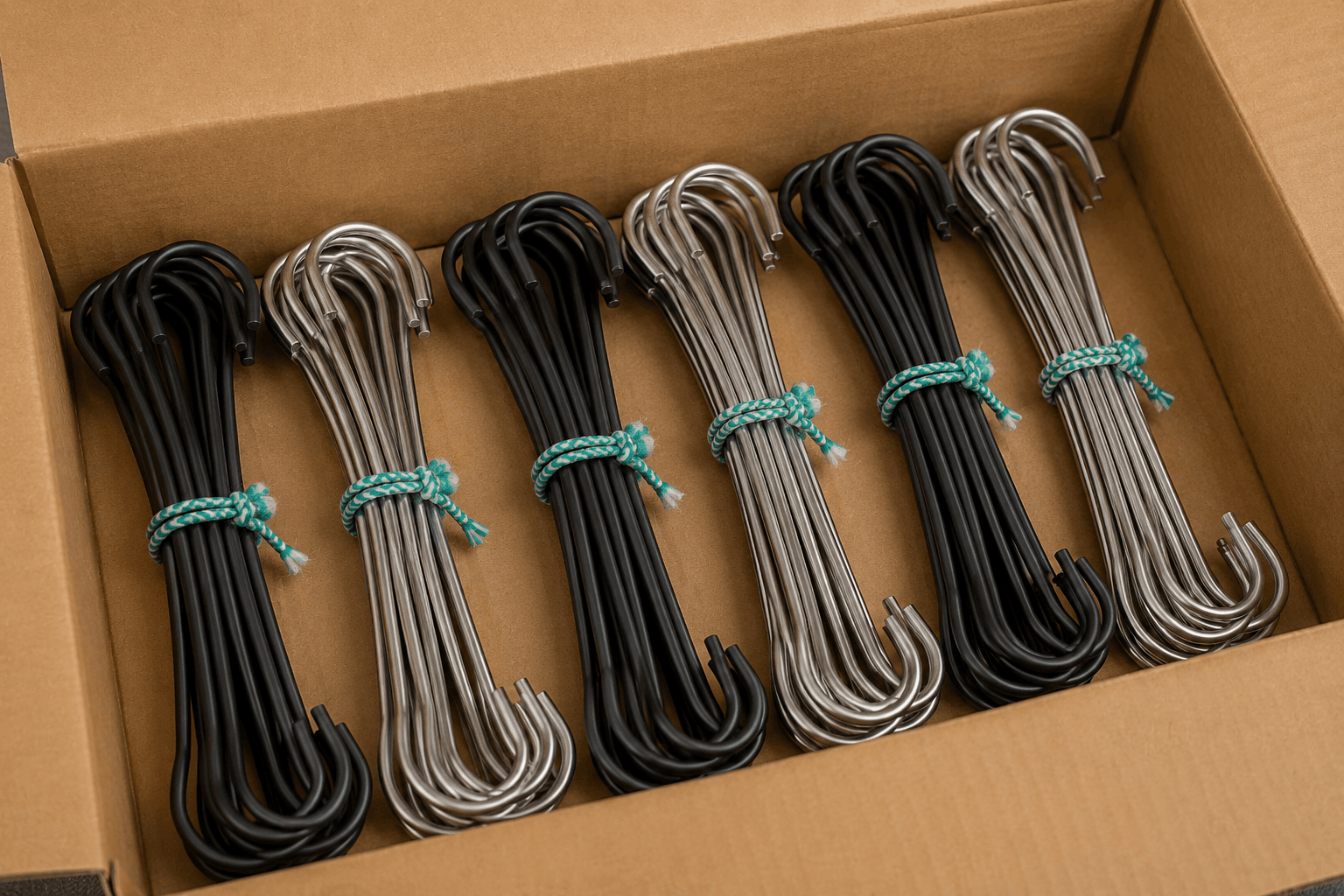
Having the right hooks in stock helps prevent emergency downtime and makes routine replenishment easier to manage.
Powder Coating Hook Inspection Checklist
During routine preventive maintenance, inspect your hooks for the following:
- Excessive powder buildup
- Bent hook geometry
- Worn contact points
- Loose or unstable hooks
- Heat discoloration
- Cracks or fatigue
- Poor electrical contact
- Difficulty hanging parts
- Increased touch-up or rework
- Uneven coating quality
If you notice multiple issues during inspection, it is likely time to replace the affected hooks rather than continuing to clean them.
The Cost of Waiting Too Long
Many facilities focus only on the cost of purchasing replacement hooks. However, worn hooks can create hidden costs that are far more expensive than the hooks themselves.
Poor hook performance can increase powder consumption, reduce transfer efficiency, slow loading and unloading, increase rejects, create rework, and reduce throughput. Over time, these small losses can add up to a significant production cost.
Replacing hooks before they cause widespread quality issues is often one of the simplest ways to improve finishing line performance.
Hook Replenishment Through EPSI VMI
For busy finishing operations, hook replacement is easier when the right parts are already available when production needs them. EPSI's Vendor Managed Inventory program can help support regular hook replenishment by keeping commonly used hooks and finishing supplies organized, monitored, and ready.
Instead of waiting until hooks are worn out or production is interrupted, VMI helps create a more proactive replenishment process.
- Helps reduce stockouts of critical hooks and hanging supplies
- Supports more consistent maintenance and replacement schedules
- Helps production teams stay focused on coating quality and throughput
- Can simplify purchasing and inventory management for repeat-use items
Frequently Asked Questions
How do worn powder coating hooks affect grounding?
As hooks wear, coating buildup and damaged contact points reduce the electrical connection between the rack and the part. Poor grounding can decrease transfer efficiency and contribute to coating defects.
Can powder buildup on hooks cause coating defects?
Yes. Excessive coating buildup acts as an insulator, reducing conductivity and making it more difficult for powder to adhere consistently.
What are the signs of bad powder coating hooks?
Common signs include bent hooks, heavy coating buildup, rounded contact points, reduced transfer efficiency, increased touch-ups, bare spots, and poor grounding.
Should I replace all hooks at once?
Not necessarily. Many finishing operations replace individual hooks as they wear while maintaining a stock of replacement hooks for routine maintenance.
Can cleaning restore worn hooks?
Cleaning removes accumulated coating but cannot restore worn metal or damaged contact points. Once hooks become physically worn, replacement is generally the better option.
See Related Articles
Continue exploring powder coating best practices, grounding, racking, and finishing process improvements.
Improve Finishing Performance with New Powder Coating Hooks
Small components can have a big impact on finishing quality. Replacing worn hooks helps restore grounding, improve transfer efficiency, reduce touch-ups, and keep production running smoothly.
Ready to improve your finishing line? Contact EPSI or explore our complete selection of powder coating hooks today.