Extend Asset Life
Restore racks that remain serviceable instead of replacing the complete assembly because of isolated wear or damage.

Do not replace serviceable production racks prematurely. EPSI can inspect, repair, refinish, and return worn racks ready for production, helping your operation extend rack life, control replacement costs, and reduce unnecessary disruption.
Rack refurbishment can be a practical alternative to premature replacement when the existing frame or design remains serviceable. EPSI helps restore function while supporting production continuity.
Restore racks that remain serviceable instead of replacing the complete assembly because of isolated wear or damage.
Scheduled pickup and return service can help coordinate refurbishment around production demands and available rack inventory.
Address structural damage, worn components, contact points, and finish deterioration that may affect rack performance.
Refurbished racks are completed and returned for reintegration into the customer's production operation.
Production racks are repeatedly exposed to handling, loading, unloading, heat, chemical processes, coating buildup, and routine mechanical wear. Over time, hooks, crossbars, welds, contact points, and frame components may become damaged or less effective.
EPSI Rack Refurbishment & Repair Services are designed to help identify serviceable racks and restore the components needed for continued production use. Depending on rack condition, work may range from targeted repairs to more extensive rebuilding and refinishing.
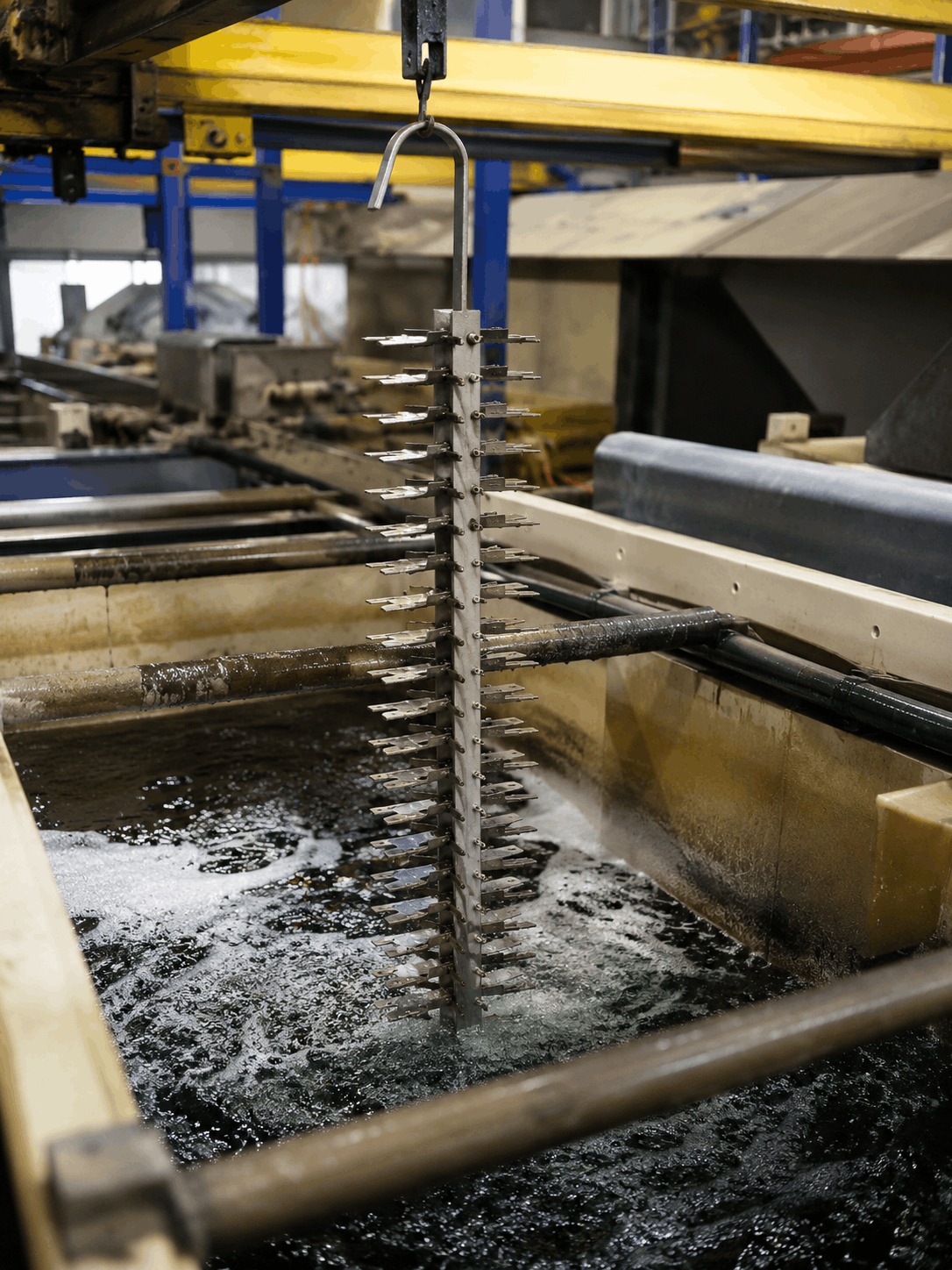
The exact service scope depends on rack construction, damage, process requirements, and whether repair remains practical. EPSI can assess each application and recommend an appropriate service plan.
Address damaged welds, weakened joints, bent sections, and other structural issues that may affect rack stability or safe handling.
Replace or repair worn hooks, crossbars, hanging points, and selected components when the primary rack structure remains serviceable.
Evaluate worn or contaminated contact areas and restore appropriate metal-to-metal contact points where the rack design permits.
Correct selected bent or misaligned components to help restore loading positions, part orientation, and conveyor compatibility.
Refinish or touch up affected surfaces as appropriate for the rack, repair scope, and intended finishing environment.
For racks requiring broader work, EPSI can evaluate whether a component-level rebuild is more practical than complete replacement.
EPSI works with your team to understand rack condition, production priorities, repair requirements, and timing before service begins.
Every refurbishment project begins with an evaluation. Service scope can then be coordinated based on rack condition, available inventory, repair requirements, and operational timing.
Review rack condition, existing design, visible damage, production requirements, and the intended finishing process.
Define the recommended repair scope, logistics, replacement components, refinishing needs, and expected service sequence.
Complete approved structural repairs, component work, refinishing, touch-up, and other specified restoration services.
Coordinate return delivery so the refurbished racks can be placed back into the customer's production operation.
Professional rack refurbishment can breathe new life into production equipment that still has years of useful service remaining. By repairing structural damage, replacing worn components, restoring contact points, and refinishing the rack where appropriate, many racks can return to production with significantly improved performance.
Every project is different, but the goal is always the same: maximize the value of your existing rack investment while avoiding unnecessary replacement costs whenever refurbishment remains the practical solution.
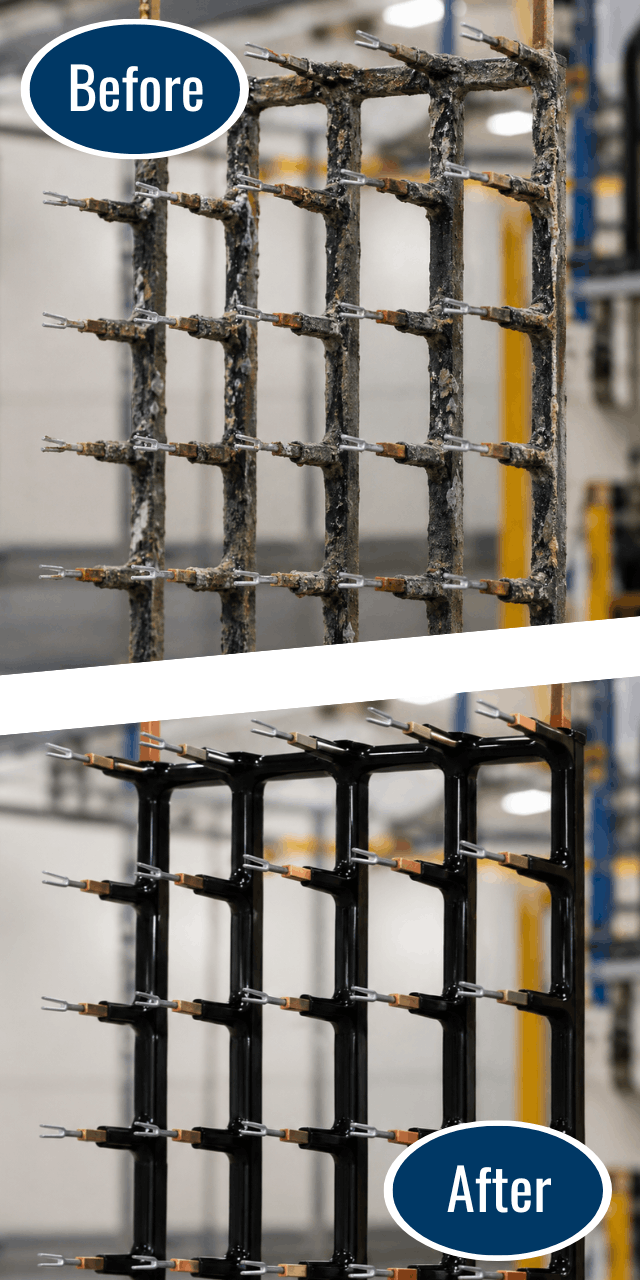
Refurbishment can provide value when the original rack design still supports production. Replacement may be more practical when process, part, capacity, or design requirements have changed.
The existing design remains useful and the rack can be restored through targeted repair, component replacement, or refinishing.
Production requirements have changed or the existing rack would need substantial redesign to provide the needed performance.
Sometimes refurbishment is not the best long-term investment. When production requirements have changed, EPSI's engineering team can design and build new racks to your exact specifications.
Custom rack designs can be developed around part geometry, loading density goals, contact requirements, conveyor spacing, handling methods, and the conditions of the finishing process.
Rack refurbishment requirements vary by process. EPSI can review the rack design, wear patterns, contact requirements, and production environment before recommending service.
EPSI combines refurbishment support with custom rack engineering, production-focused problem solving, and additional racking services.
Access support for rack repair, replacement decisions, design changes, and custom production requirements.
Recommendations can account for part handling, process conditions, line compatibility, loading density, and operational needs.
Combine evaluation, pickup, repair, restoration, return logistics, and replacement rack support through one supplier.
Maintain existing rack assets while preserving the option to redesign or replace them as production requirements evolve.
Whether your racks need targeted repair, broader refurbishment, or a completely new design, EPSI can help evaluate the most practical next step for your production operation.
Learn when industrial finishing racks may be candidates for repair, what the refurbishment process can include, and when a new custom rack may be the better investment.
Many production racks may be candidates for refurbishment when the main structure and original design remain serviceable. EPSI can evaluate rack condition, visible damage, component wear, and current production requirements before recommending repair or replacement.
Depending on rack construction and condition, service may include structural repair, weld repair, straightening, component replacement, hook or crossbar work, ground point restoration, refinishing, coating touch-up, or broader rack rebuilding.
EPSI can coordinate scheduled pickup and return service as part of the refurbishment program. Logistics and timing should be discussed during project planning so the service can be aligned with rack availability and production requirements.
EPSI's goal is to complete the approved repair and restoration scope before returning the racks for reintegration into the customer's production operation. Final suitability depends on the agreed service scope and application requirements.
Worn or damaged rack components may be repaired or replaced when the rack design and remaining structure support that work. EPSI can review the specific component, material, attachment method, and production requirements before recommending a solution.
Grounding areas may be evaluated as part of a refurbishment project. Depending on rack design and condition, EPSI may recommend restoring or replacing selected contact points to support reliable metal-to-metal contact.
Turnaround time varies based on rack quantity, rack condition, repair complexity, component availability, refinishing needs, and logistics. EPSI can discuss timing after reviewing the racks and defining the required service scope.
Replacement may be more practical when damage is extensive, the frame is no longer serviceable, part geometry has changed, higher loading density is required, or the existing design no longer supports the production process. EPSI can help compare both paths.
Yes. EPSI's engineering team can design and build custom racks around part geometry, loading density, contact requirements, conveyor spacing, handling methods, and the conditions of the finishing process.
Rack refurbishment may support racks used in powder coating, e-coat, anodizing, plating, and other industrial finishing processes. The rack material, construction, wear pattern, and process conditions should be evaluated before service is approved.